
Fuel Your Gut: 12 Superfoods & Meal Plans for Optimal Digestive Health [2025 Nutrition Guide]
Forget generic fiber advice. This is your science-backed blueprint to rebuilding your microbiome.
Look, we need to talk about what’s actually happening inside your stomach. For years, we’ve treated our digestive system like a simple fuel tank—you put food in, you get energy out. But as we move further into 2025, the scientific consensus has shifted dramatically. We’ve entered the era of “Microbiome 2.0.”
You aren’t just eating for yourself anymore. You are the caretaker of approximately 100 trillion microbial guests that control everything from your immune system to your anxiety levels. When these guests are unhappy, you feel it.
I’ve spent years analyzing nutrition trends, and frankly, most “gut health” advice is outdated. It’s usually a generic recommendation to “eat more fiber.” But did you know that for some people, the wrong type of fiber can actually make bloating worse? Or that your gut bacteria has a direct line to your brain?
This guide moves beyond the basics. We are going to look at specific strains, the latest 2024 clinical guidelines, and a practical 7-day plan to reset your system. We’re talking about market-verified strategies, backed by data.
Let’s fix that. Here is your definitive resource for fueling your gut.
The Science of Gut Health: What’s New in 2025?
Before we get to the food, we have to understand the mechanism. If you don’t know why you’re eating something, you won’t stick with it. The research landscape has evolved rapidly in the last 12 months.
1. The Gut-Brain Axis is No Longer Theory
You’ve probably felt “butterflies” in your stomach before a big event. That’s the vagus nerve talking. But recent research shows this communication highway is busier than we thought. We now know that specific foods—often called “psychobiotics”—can modulate neurotransmitters like serotonin. In fact, roughly 95% of your body’s serotonin is produced in your gut, not your brain.
2. Postbiotics: The Real Goal
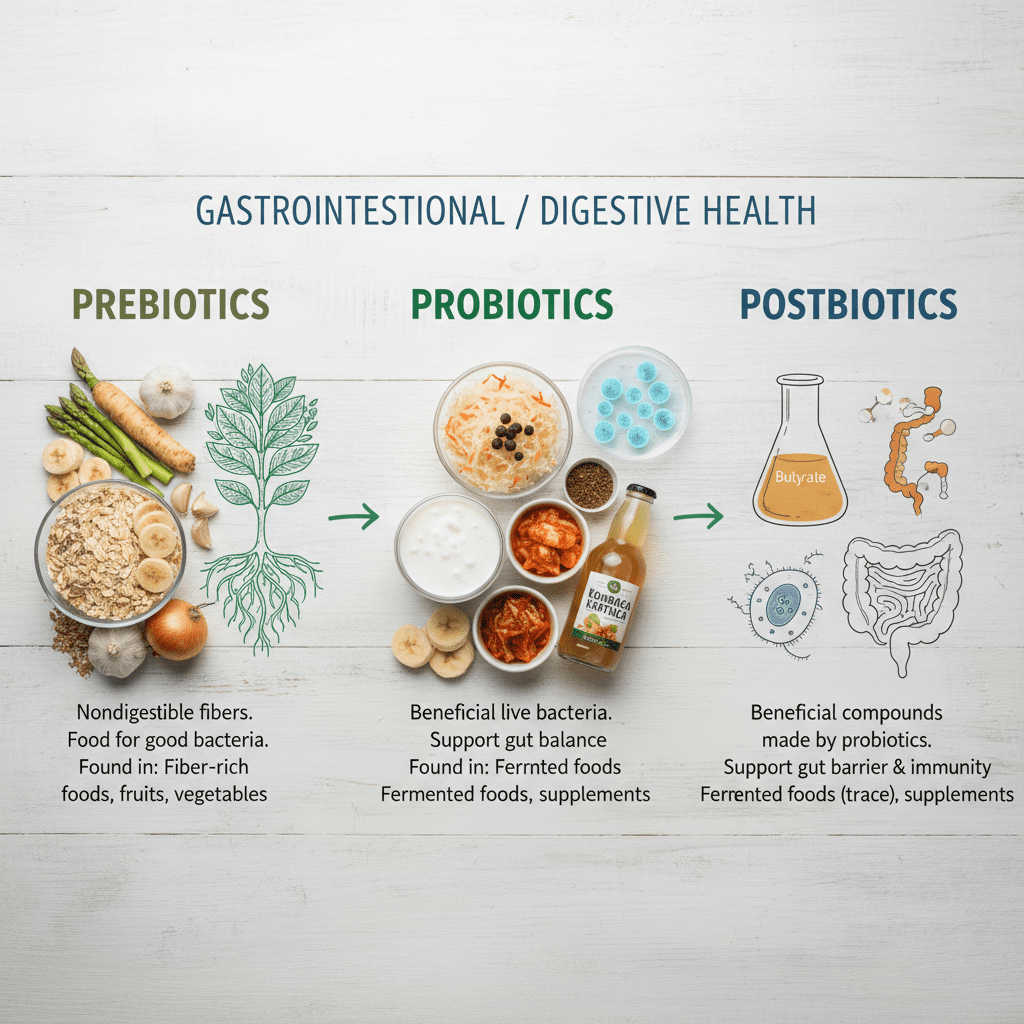
Everyone talks about probiotics (the live bacteria) and prebiotics (the fiber that feeds them). But the new frontier in 2025 is postbiotics. These are the beneficial chemical compounds—like short-chain fatty acids (SCFAs)—that the bacteria produce after they feast on fiber.
Think of it this way: Probiotics are the factory workers. Prebiotics are the raw materials. Postbiotics are the actual product (like butyrate) that lowers inflammation and heals your gut lining.
3. Diversity is the New Gold Standard
For a long time, we thought we just needed to flood the system with Lactobacillus. We were wrong. Health comes from microbiome diversity.
A fascinating citation comes from Cell / News-Medical Review (Oct 2024), where researchers found that high-fiber diets facilitate the growth of a specific bacterial cluster (C1). This cluster is essential for better health outcomes in chronic conditions. If you eat the same three vegetables every day, you aren’t feeding the C1 cluster. The goal is to hit 30 different plant foods per week.
The “Dirty Dozen” of Digestion: 12 Research-Backed Superfoods
Forget the hype. These are the 12 foods that have withstood the test of clinical scrutiny in 2024 and 2025. I’ve categorized them by their primary function to help you choose what your body needs.
The Fermented Powerhouses (Probiotics)
What it is: A fermented milk drink that tastes like a tart liquid yogurt.
The 2025 Science: While yogurt is good, kefir is the heavyweight champion. It typically contains over 60 strains of bacteria and yeast, making it up to 3x more potent than standard yogurt. It actively colonizes the gut tract rather than just passing through.
How to Eat It: Drink 1 cup daily. If you are sensitive to dairy, look for water kefir or coconut kefir. Pro Tip: Use it as a base for smoothies to mask the sour tang.
What it is: Traditional Korean salted and fermented vegetables, usually napa cabbage and Korean radishes.
The 2025 Science: This isn’t just a condiment; it’s medicine. Research championed by experts like Dr. Justin Sonnenburg at Stanford highlights how fermented foods like kimchi increase microbiome diversity. A landmark study confirmed that a diet high in fermented foods decreases molecular signs of inflammation across the board.
How to Eat It: Add a tablespoon to your eggs or rice bowls. Start small—it’s powerful.
What it is: Finely cut raw cabbage that has been fermented by various lactic acid bacteria.
The 2025 Science: Look for “raw” or “unpasteurized” on the label. Pasteurized versions kill the bacteria. Sauerkraut is rich in Vitamin U (S-methylmethionine), which has been shown to support the healing of stomach ulcers and the gut lining.
How to Eat It: Use it as a topper for avocado toast or salads.
The Fuel Sources (Prebiotics & Fibers)
Americans are in a “fiber gap.” According to Purdue University / USDA data from March 2024, most of us only get 15g of the recommended 30g of fiber. But here is the catch: whole food fiber is superior to supplements.
What it is: Also known as sunchokes, these are knobby tubers that look like ginger root.
The 2025 Science: They are one of the highest natural sources of inulin, a type of prebiotic fiber that passes through to the colon unchanged, where it ferments and feeds Bifidobacteria.
How to Eat It: Roast them like potatoes. Caution: Start with a small amount (like, really small) as they can cause significant gas if your gut isn’t used to them.
What it is: Unripe bananas (still green on the skin).
The 2025 Science: Before a banana ripens into sugar, it is comprised of resistant starch. This starch resists digestion and functions like a soluble fiber. However, a June 2024 study from Cornell University notes that individual responses to resistant starch vary, so monitor how you feel.
How to Eat It: Blend them into smoothies. You won’t taste the bitterness when mixed with berries.
What it is: Tiny black seeds from the plant Salvia hispanica.
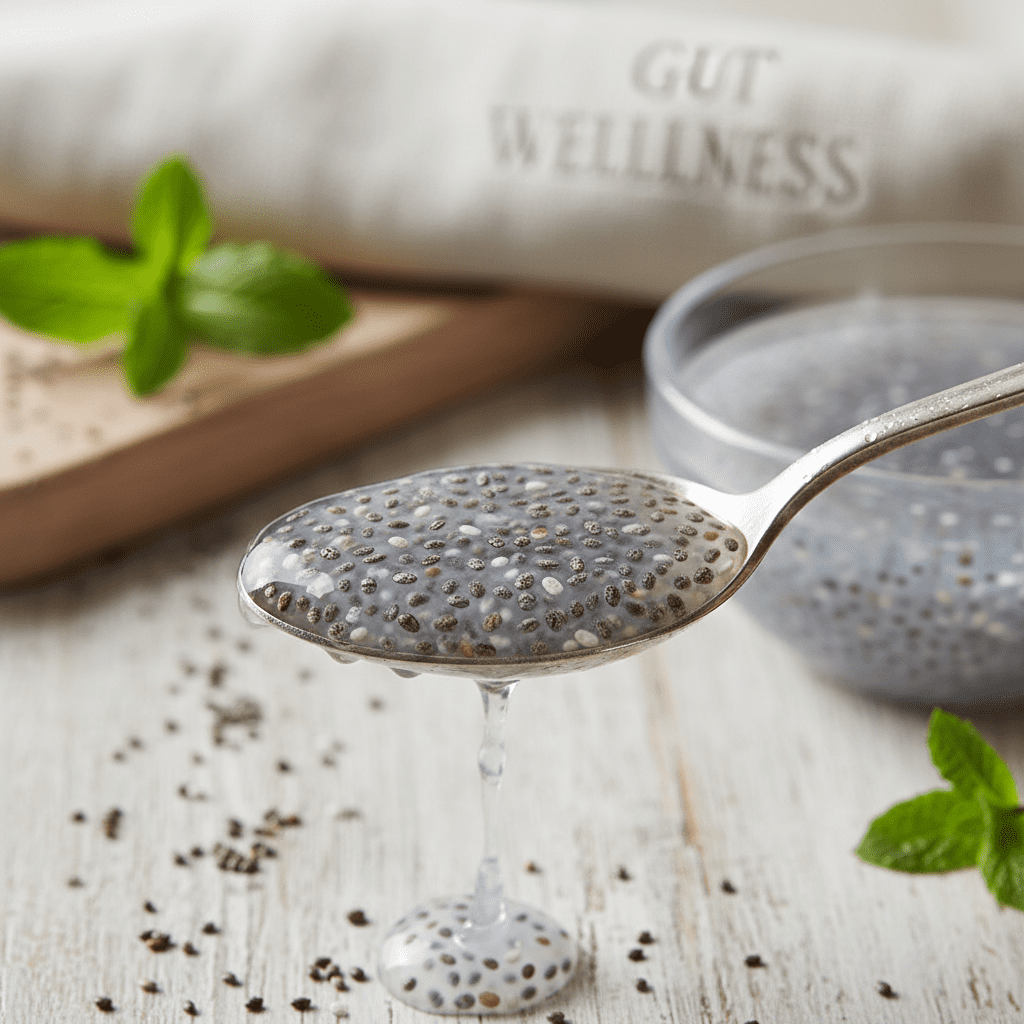
The 2025 Science: When soaked, chia forms a gel. This mucilage is incredibly soothing for the intestinal wall and helps bulk up stool to improve regularity without being harsh.
How to Eat It: Chia pudding (soaked in almond milk overnight) is the easiest breakfast hack.
The Healers & Modulators
The 2025 Science: While trendy, the science holds up on the components. Bone broth is rich in L-glutamine, an amino acid that cells in the digestive tract use as their primary fuel source to maintain the integrity of the intestinal wall (preventing “leaky gut”).
The 2025 Science: If you feel like food just “sits” in your stomach, you need ginger. It stimulates the Migrating Motor Complex (MMC), the system that sweeps food through your intestines.
The 2025 Science: These are rich in polyphenols. Recent studies suggest polyphenols specifically promote the growth of Akkermansia muciniphila, a bacteria associated with metabolic health and leanness.
The 2025 Science: Curcumin in turmeric modulates the gut microbiota. It must be paired with black pepper (piperine) to increase absorption by 2000%.
The 2025 Science: Fermented soybean paste provides natural digestive enzymes helping break down proteins and fats.
The 2025 Science: Yes, really. Cocoa content of 85% or higher acts as a prebiotic. Gut bacteria ferment the cocoa into anti-inflammatory compounds.
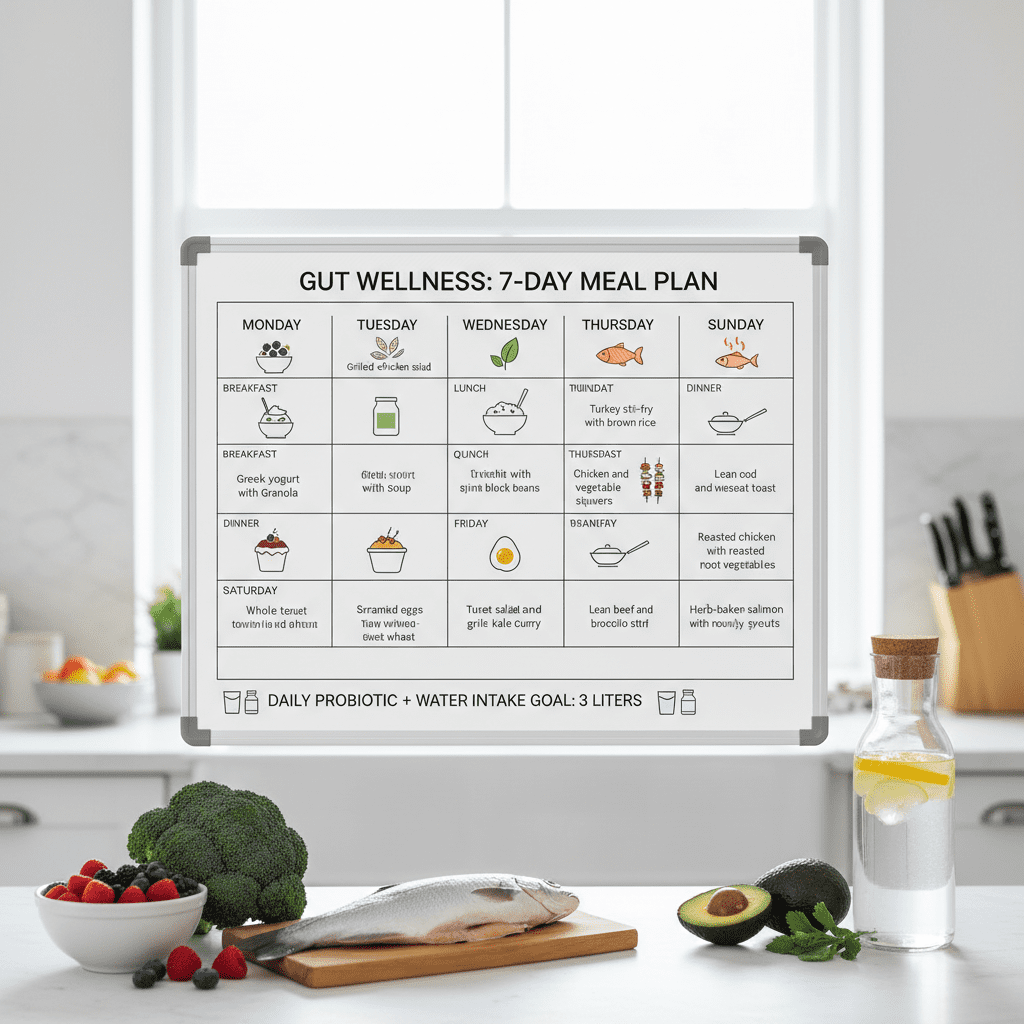
The 7-Day “Gut Reset” Meal Plan
Theory is great, but execution is everything. This meal plan focuses on “Synbiotic Combinations”—pairing a prebiotic (fuel) with a probiotic (bacteria) in the same meal to maximize survival rates.
💡 How to Build a Synbiotic Bowl
Base: Leafy greens or cooked cooled grains (Resistant Starch)
Protein: Salmon, Tempeh, or Chicken
The Probiotic: A scoop of Kimchi or Sauerkraut
The Prebiotic: Sliced garlic, onions, or asparagus
The Fat: Olive oil (Polyphenols)
- Breakfast: Kefir smoothie with green banana and blueberries.
- Lunch: Bone broth soup with shredded chicken and cooked carrots (easy to digest).
- Dinner: Baked Salmon with ginger glaze and steamed asparagus.
- Breakfast: Oatmeal topped with flaxseeds and stewed apples.
- Lunch: Lentil soup (prebiotic) with a side of sourdough bread.
- Dinner: Stir-fry with tofu, broccoli, and a miso-ginger sauce.
- Breakfast: Greek yogurt with walnuts and a drizzle of honey.
- Lunch: “Synbiotic Salad”: Greens, chickpeas, and a generous scoop of sauerkraut.
- Dinner: Roast chicken with cooled roasted potatoes (resistant starch).
(Continue this pattern for 7 days, gradually increasing fiber intake to avoid bloating. Sudden massive fiber intake is a rookie mistake.)
Lifestyle Factors That Ruin Your Gut (And How to Fix Them)
You can eat all the kimchi in the world, but if your lifestyle is toxic, your gut won’t heal. Here are three major disruptors identified in recent literature.
1. The Stress-Gut Loop
Chronic stress puts your body in “fight or flight” mode, which effectively shuts down digestion. Blood flow is diverted away from the gut, leading to inflammation and dysbiosis. I always tell my clients: how you eat is as important as what you eat. Sit down. Breathe.
2. The Antibiotic Aftermath
Antibiotics save lives, but they carpet-bomb your microbiome. If you must take them, you need a recovery protocol. However, be careful with generic probiotics. The American Gastroenterological Association (AGA) Clinical Practice Guidelines (March 2024) actually suggests against the use of conventional probiotics for conditions like IBS unless there is specific clinical evidence. This means food sources (like fermented veggies) are often a safer bet than random pills.
3. Artificial Sweeteners
The World Health Organization (WHO) raised eyebrows in 2023/2024 regarding non-sugar sweeteners. Some studies suggest sweeteners like saccharin and sucralose can negatively alter gut bacteria, potentially inducing glucose intolerance. If you want sweet, stick to small amounts of maple syrup or raw honey.
Common Digestive Questions (FAQ)
How long does it take to reset your gut microbiome?
While diet changes can alter the bacterial composition in as little as 24 to 48 hours, establishing a stable, healthy microbiome typically takes 2 to 4 weeks of consistent habits. Deep healing of the gut lining (leaky gut) may take 3 to 6 months.
Are eggs good for gut health?
Generally, yes. Eggs are easy to digest and contain amino acids that support healing. However, if you have a sensitivity to albumin (egg white protein) or high sulfur sensitivity, they might cause bloating. It’s bio-individual.
What is the fastest way to fix a leaky gut?
Based on clinical observations, a combination of Intermittent Fasting (to give the gut a rest), Bone Broth (for glutamine), and removing inflammatory triggers (gluten, alcohol, processed sugar) shows the quickest results for barrier repair.
Is coffee bad for my digestion?
Not necessarily. Coffee contains polyphenols and can stimulate motility (keeping you regular). However, the acidity can irritate an inflamed stomach lining. If you have acid reflux or gastritis, switch to matcha or green tea temporarily.
Conclusion: Consistency Over Perfection
Healing your gut isn’t about following a restrictive diet forever. It’s about abundance—adding more plants, more fermented foods, and more variety to your plate.
If there is one thing I want you to take away from this guide, it’s this: Start small. Pick two foods from the list above (maybe Kefir and Chia seeds) and integrate them into your routine this week. See how you feel. Your microbiome is resilient; give it the right tools, and it will do the repair work for you.