
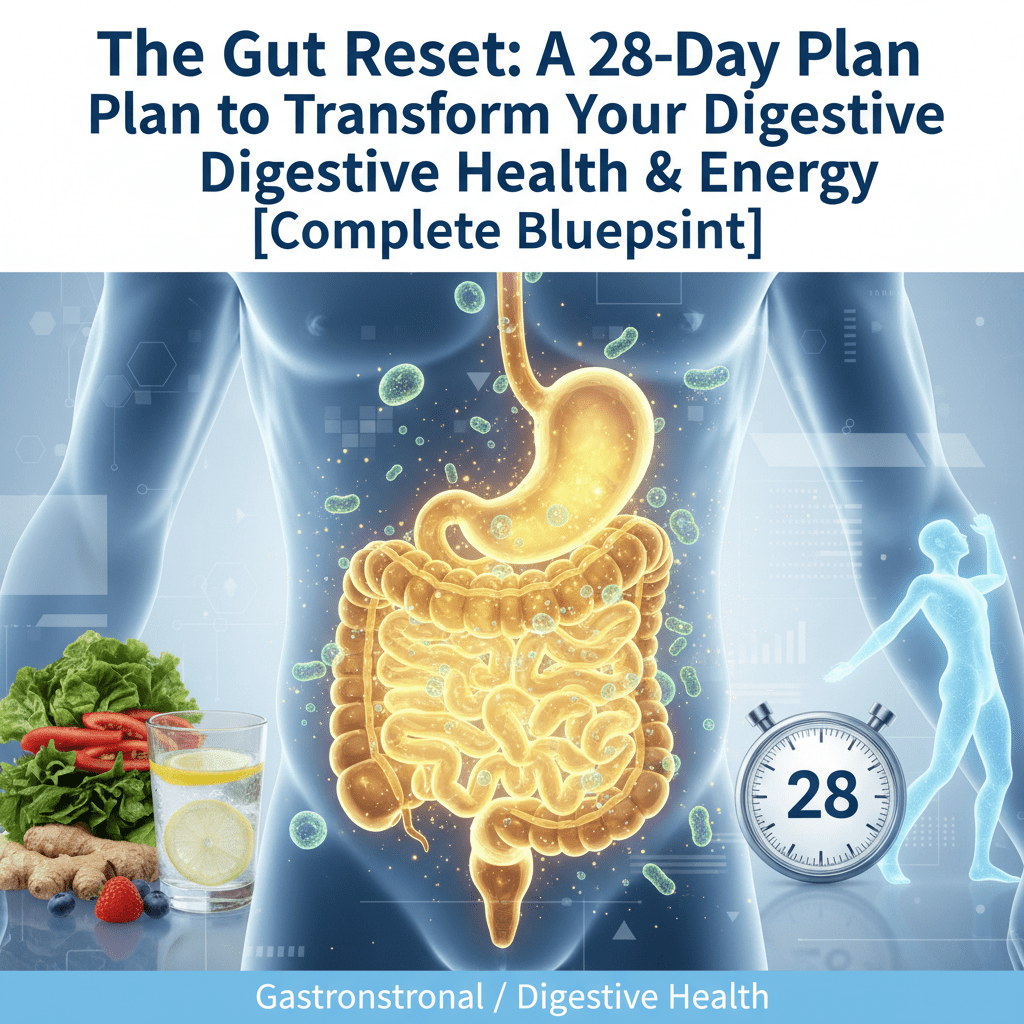
The Gut Reset: A 28-Day Plan to Transform Your Digestive Health & Energy [Complete Blueprint]
Did you know that 95% of your serotonin—the “happy hormone”—is produced in your gut, not your brain? If you are waking up tired, struggling with persistent bloating, or fighting anxious thoughts that seem to come out of nowhere, the problem isn’t just in your head. It’s in your microbiome.
In my years of analyzing health trends and medical data, I’ve seen a concerning shift. We are currently facing a silent crisis. According to a May 2024 report by Digestive Disease Week, colorectal cancer rates increased by 500% among children ages 10 to 14 and 333% among teens between 1999 and 2020. This isn’t just bad luck; it’s environmental. It’s dietary. And it’s fixable.
Forget the expensive “detox teas” that act as glorified laxatives. True healing requires biology, not marketing. Direct healthcare costs for GI diseases in the US are now estimated at $136 billion annually, according to an update from Oshi Health. Why spend a fortune managing disease when you can invest 28 days to prevent it?
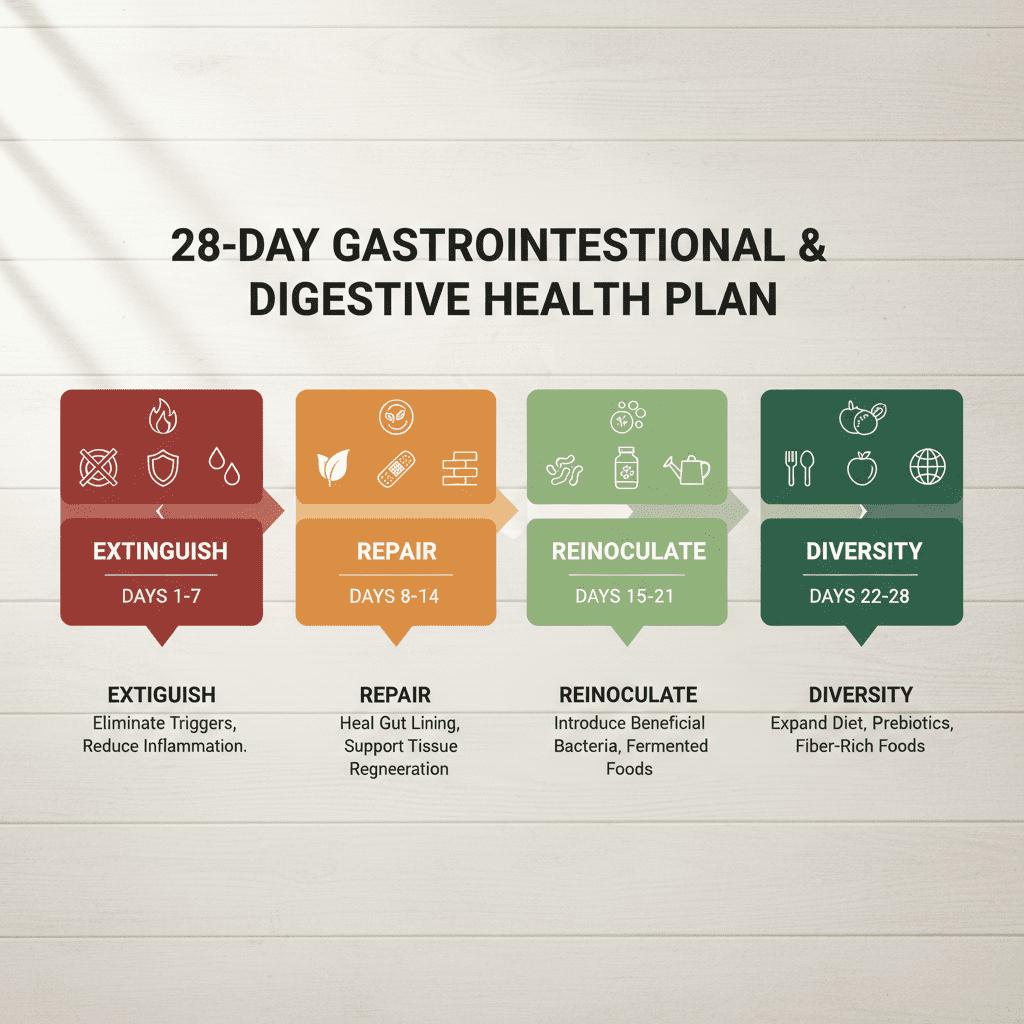
This is your definitive 28-Day Gut Reset Plan. It’s a 4-phase biological blueprint designed to extinguish inflammation, repair your gut lining, reinoculate your system with beneficial bacteria, and diversify your ecosystem for long-term health.
The Science: Why Your Gut Needs a “Reset” (Not a Detox)
Let’s get one thing clear: your body has a liver and kidneys. You don’t need a “detox.” What you need is a reset of the microbial environment. Think of your gut as a garden. If the soil is toxic and overrun with weeds (bad bacteria), planting expensive seeds (probiotics) won’t work. You have to fix the soil first.
The Gut-Brain Axis: The Command Center
The connection between your digestion and your mood is physically tangible. Dr. Sarkis Mazmanian, a microbiologist at Caltech, notes in a July 2024 Seed Scientific Review that specific molecules produced in the gut travel to the brain and change emotional behaviors. This is the Gut-Brain Axis.
When your gut is inflamed, it sends distress signals to your nervous system. This is why “gut feelings” are real. If you’re stressed, your gut slows down (fight or flight). If your gut is damaged, your brain feels foggy.
The “Ultra-Processed” Problem
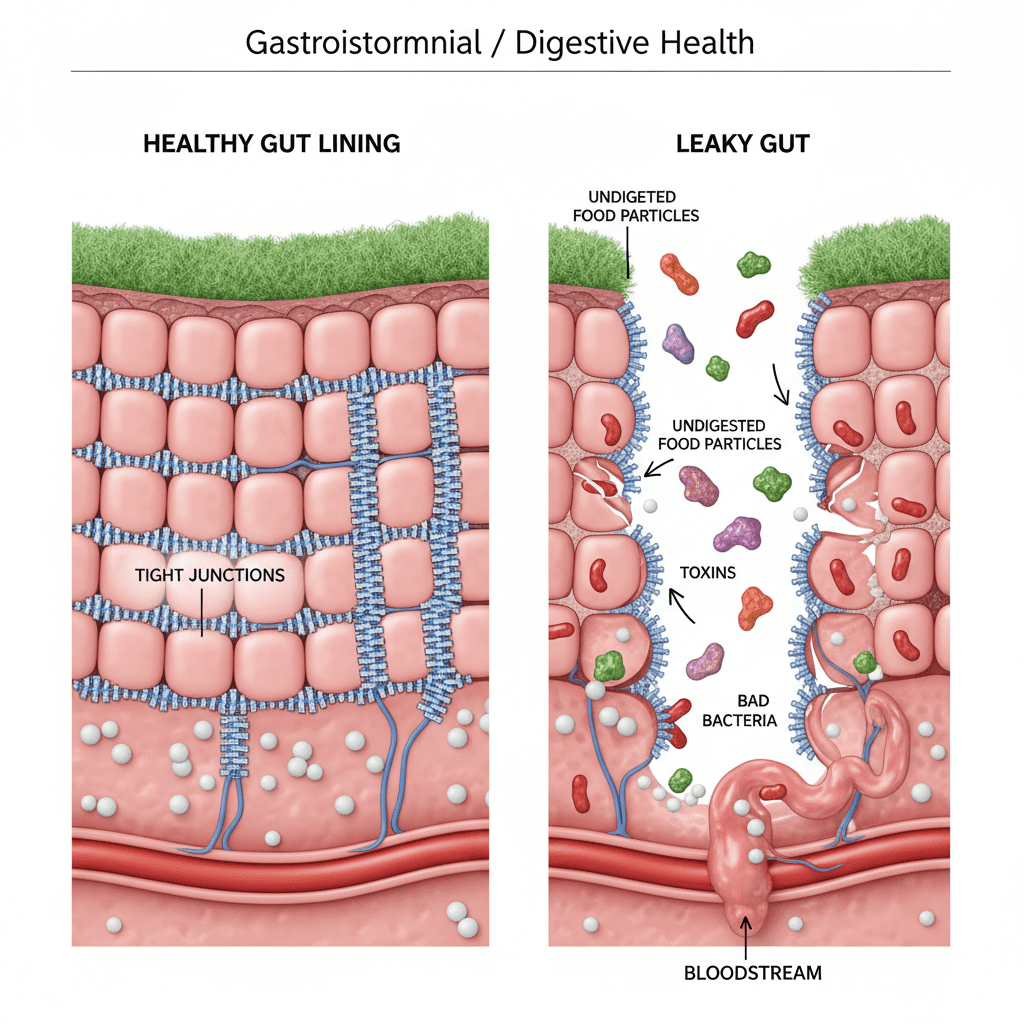
Why are we all so bloated? Look at the pantry. A June 2024 study in the Nutrients Journal confirms that ultra-processed foods (UPFs) promote a pro-inflammatory environment and reduce microbial diversity. Emulsifiers found in processed foods act like detergents, stripping away the protective mucin layer of your gut lining, allowing toxins to leak into your bloodstream.
The 2024 Reality Check
“People born between 1981-1996 face double the risk of colorectal cancer compared to those born in 1950.”
— UC Davis Health, National Colorectal Cancer Awareness Report (March 2024)
Signs You Need a Reset
You might be wondering, “Is this for me?” If you experience three or more of the following, your microbiome is likely in a state of dysbiosis:
- Constant bloating after meals (looking 6 months pregnant by 6 PM).
- Brain fog or difficulty concentrating.
- Adult acne or rosacea (the skin-gut connection).
- Sugar cravings that feel uncontrollable.
- Food sensitivities that seem to be multiplying.
Phase 1: The “Extinguish” Phase (Days 1-7)
Calm the Fire
Days 1-7
The Goal: Remove inflammation triggers and let the gut lining rest.
Imagine trying to heal a sprained ankle while running a marathon every day. It’s impossible. Phase 1 is about stopping the damage. We aren’t counting calories; we are eliminating irritants.
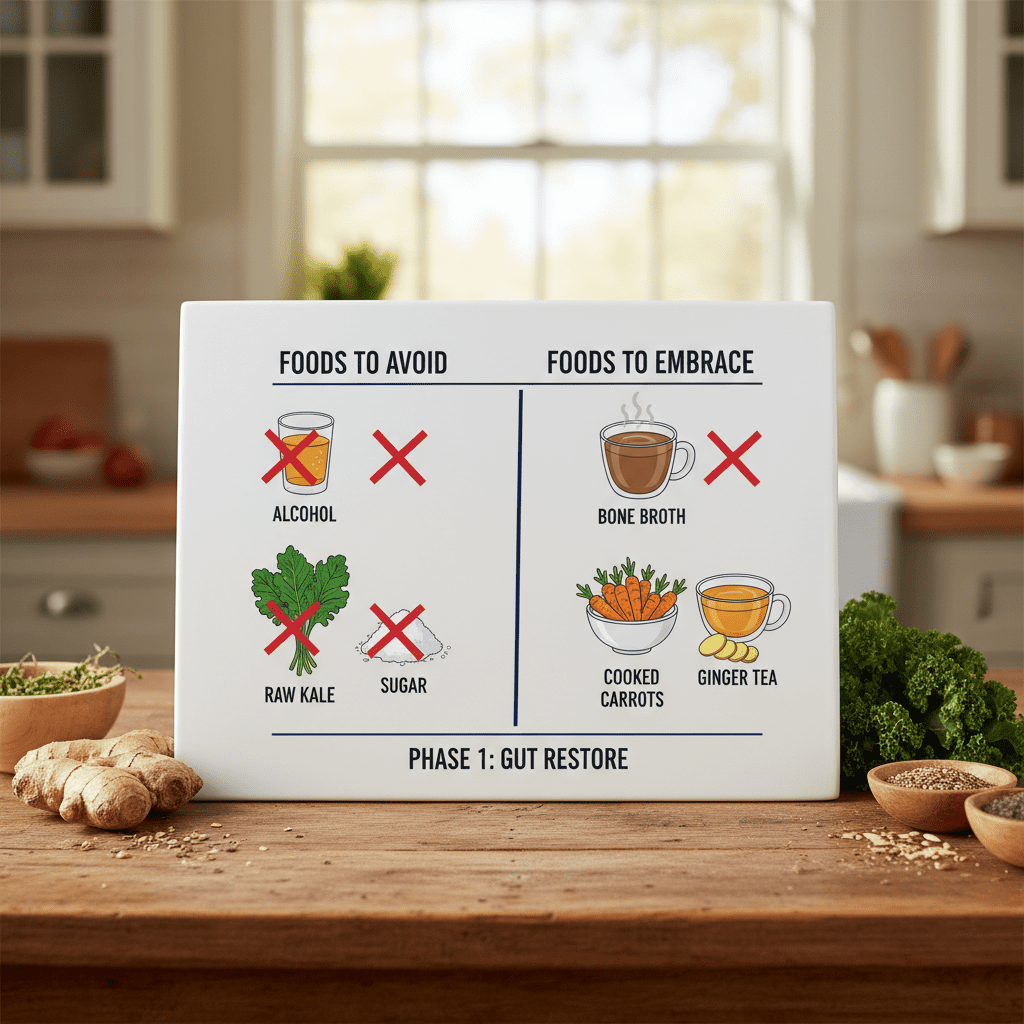
The “No-Go” List
For the next 7 days, you must be ruthless with your intake. This isn’t forever, but it is necessary.
- Ultra-Processed Foods (UPFs): Anything with ingredients you can’t pronounce.
- Alcohol: It increases intestinal permeability immediately.
- Artificial Sweeteners: Aspartame and sucralose can decimate healthy bacteria.
- Gluten & Dairy (Temporary): Even if you aren’t celiac, gluten triggers the release of zonulin, a protein that opens the gaps in your gut lining.
The “Warm & Cooked” Rule
In my experience coaching clients, the biggest mistake people make is switching to raw kale salads immediately. If your gut is inflamed, raw fiber is like sandpaper on an open wound.
Stick to warm, cooked, and pureed foods. Soups, stews, and roasted root vegetables are your best friends. They are “pre-digested” by the cooking process, requiring less energy from your system.
Daily Protocol: Circadian Fasting
You need to activate the Migrating Motor Complex (MMC). This is your gut’s housekeeping wave that sweeps away debris and bacteria from the small intestine. It only happens when you are fasting.
According to Dr. Megan Rossi / King’s College London Research (October 2025 discussion), sleep deprivation and constant grazing stop this process. Aim for a 12-hour fasting window (e.g., stop eating at 7 PM, breakfast at 7 AM). This gives your gut the night off.
Phase 2: The “Repair” Phase (Days 8-14)
Seal the Leaks
Days 8-14
The Goal: Heal the mucosal barrier and tighten the cellular junctions.
Now that the fire is out, we need to rebuild the house. This phase focuses on “Leaky Gut” or intestinal permeability.
Key Nutrients for Repair
While I believe in food first, specific nutrients accelerate barrier repair:
- L-Glutamine: The primary fuel for the cells lining your intestinal wall (enterocytes).
- Collagen/Glycine: Essential for tissue repair.
- Zinc Carnosine: Stabilizes the gut mucosa.
Power Foods: The Broth Protocol
Bone broth is rich in glutamine and collagen. If you are plant-based, mushroom broth with seaweed offers similar mineral benefits. Aim for one cup daily.
Bioavailability Hack
“Cooking carrots with healthy fats increases beta-carotene absorption by 600%, aiding gut lining repair.”
— Nutritional Science Analysis (Cited in Winter Gut Protocol 2025)
Managing “Die-Off” Symptoms
As you starve bad bacteria of sugar and processed carbs, they may release toxins as they die. This is known as the Herxheimer reaction. You might feel flu-like symptoms, fatigue, or irritability around Day 10. Do not quit. This is a sign the plan is working. Drink extra water and rest.
Phase 3: The “Reinoculate” Phase (Days 15-21)
Plant the Seeds
Days 15-21
The Goal: Introduce beneficial bacteria and the fertilizer they need to thrive.
Your soil is prepped. Now we plant. But be careful—too much too soon causes massive bloating.
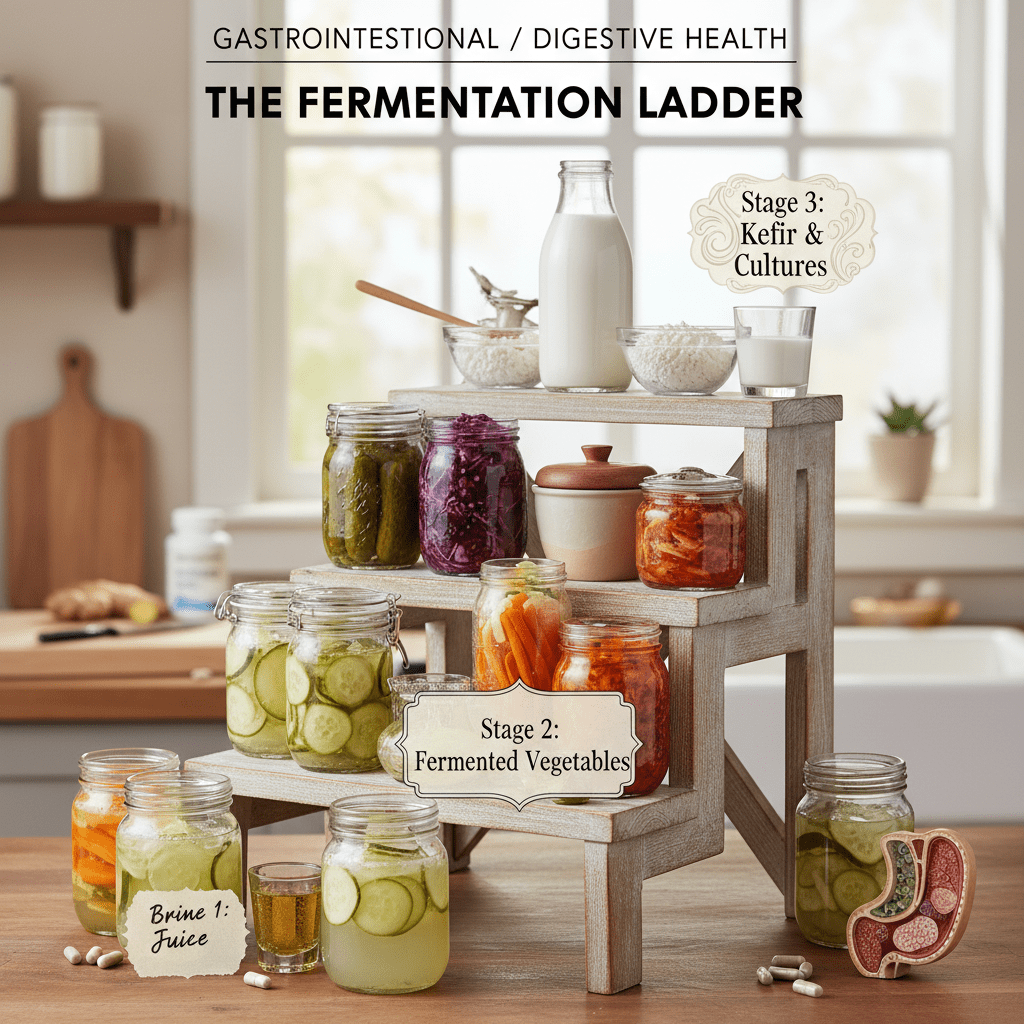
The Fermented Food Ladder
A landmark study from Stanford University (2021/2024 Follow-up) found that a high-fermented food diet increased microbiome diversity and decreased 19 inflammatory markers within 10 weeks. Fiber alone didn’t do this.
Start the “Fermentation Ladder” slowly:
- Days 15-16: 1 teaspoon of sauerkraut juice (no cabbage yet).
- Days 17-18: 1 tablespoon of sauerkraut or kimchi.
- Days 19-21: 2-3 tablespoons of kefir, yogurt, or fermented veggies.
Prebiotics vs. Probiotics
Probiotics are the bacteria (the seeds). Prebiotics are the fiber (the fertilizer). You need the fertilizer more than the seeds.
The Winter Vegetable Advantage: Foods like cold cooked potatoes, onions, garlic, and Jerusalem artichokes are high in inulin and resistant starch. These feed Bifidobacteria, a crucial strain for gut immunity.
Phase 4: The “Diversity” Phase (Days 22-28)
Future-Proofing
Days 22-28
The Goal: Expand your microbial ecosystem through variety.
Dr. Megan Rossi, known as “The Gut Health Doctor,” stated in a 2025 interview that “Diversity is key—aim for 30 different plants a week.” This is the single strongest predictor of a healthy gut.
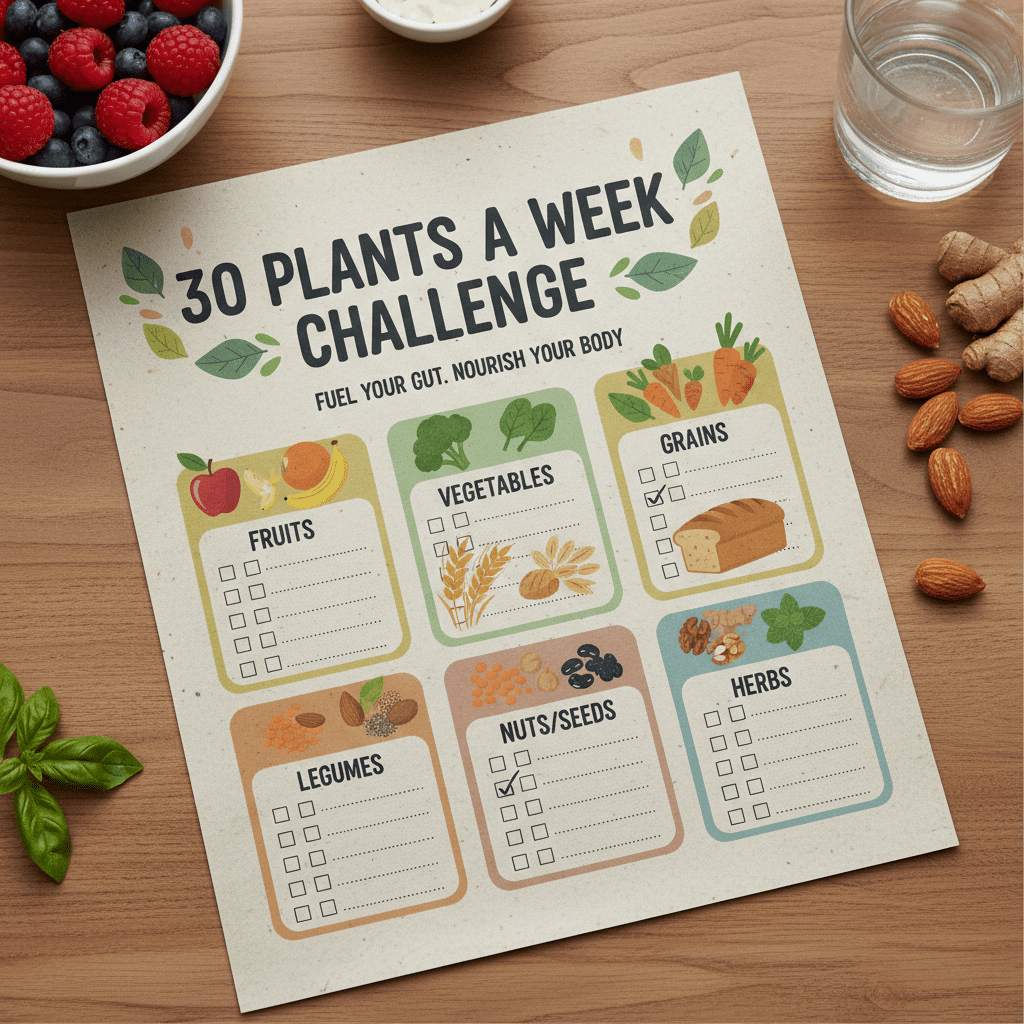
The “30 Plants Per Week” Challenge
This sounds daunting, but it includes herbs, spices, nuts, seeds, and grains. Here is how you hit 30:
- Breakfast: Oats + Chia Seeds + Walnuts + Blueberries + Cinnamon (5 plants).
- Lunch: Mixed greens (Spinach, Arugula) + Tomato + Cucumber + Olive Oil + Lemon (6 plants).
- Dinner: Stir fry with Garlic, Ginger, Onion, Broccoli, Carrot, Peppers (6 plants).
That’s 17 plants in one day. You can do this.
Reintroduction Strategy
Now is the time to test the foods you eliminated in Phase 1. Try gluten or dairy one at a time. Eat a small amount, then wait 48 hours. Watch for the return of bloating or brain fog. If you feel fine, your gut barrier has likely healed enough to tolerate them occasionally. If not, keep them out for another month.
FAQ: Your Gut Reset Questions Answered
How long does it take to really reset your gut?
While Tim Spector notes changes can happen in as little as 24 hours, a full “reset” of the mucosal lining and a stable shift in microbial populations typically takes 28 days to 3 months. Consistency is key.
Can I drink coffee on a gut reset?
Yes, but with caveats. Coffee is rich in polyphenols, which bacteria love. However, caffeine increases cortisol (stress). Stick to one cup of high-quality, black coffee or coffee with a splash of nut milk. Avoid sugar and artificial creamers. If you suffer from acid reflux/GERD, switch to green tea for this month.
Do I need expensive supplements?
No. Whole foods are always superior. The American Gut Project data consistently shows that diet variety beats supplement intake. Supplements like L-Glutamine or a high-quality probiotic are “boosters,” not foundations. If you have a budget, spend it on organic vegetables, not pills.
Why do I feel worse when I start probiotics?
This is classic “die-off” or simply overloading a sensitive system. If you pour a bucket of water on a dying plant, it drowns. Start with food-based probiotics (sauerkraut) in tiny doses before moving to capsules.
Conclusion: The “New You” Awaits
Completing this 28-day blueprint isn’t just about fitting into your jeans comfortably—though that will happen. It’s about cognitive clarity, sustained energy, and immune resilience. By following this protocol, you aren’t just dieting; you are rebuilding the very engine of your health.
Remember the data: A single course of antibiotics can alter your gut for 12 months (Nature Microbiology, 2024). Your gut is resilient, but it is also delicate. Treat it with the respect it deserves.
The next 28 days will be a challenge, but the reward is a body that works for you, not against you. Start with Phase 1 today. Your microbiome is listening.