
Beyond the Plate: Your Complete Guide to Preventing Digestive Problems Naturally [2025 Update]
You’re eating the right fiber, you’ve spent a fortune on probiotics, and you’ve cut out gluten. Yet, by 2 PM, your gut still feels like an inflated balloon. If this sounds familiar, you aren’t alone—and more importantly, it’s not all in your head.
The missing link to your digestive health isn’t necessarily on your plate. In 2025, the science is clear: the most profound drivers of gut health are hidden in your nervous system, your sleep quality, and your internal clock.
According to survey trends from the American Gastroenterological Association (AGA), 40% of Americans now report daily gastrointestinal trouble that disrupts their routine, a number that is rising alongside stress levels.
In my years analyzing health trends, I’ve seen countless people obsess over “superfoods” while ignoring the physiological environment those foods land in. Imagine planting expensive seeds in concrete—that is what eating a perfect salad in a state of high stress does to your body.
This guide moves beyond the basic “eat more yogurt” advice. We are going to explore the “Invisible 3″—Stress, Sleep, and Rhythm—and how mastering them can prevent digestive problems naturally.
The “Invisible” Gut Killers: Why Diet Isn’t Enough
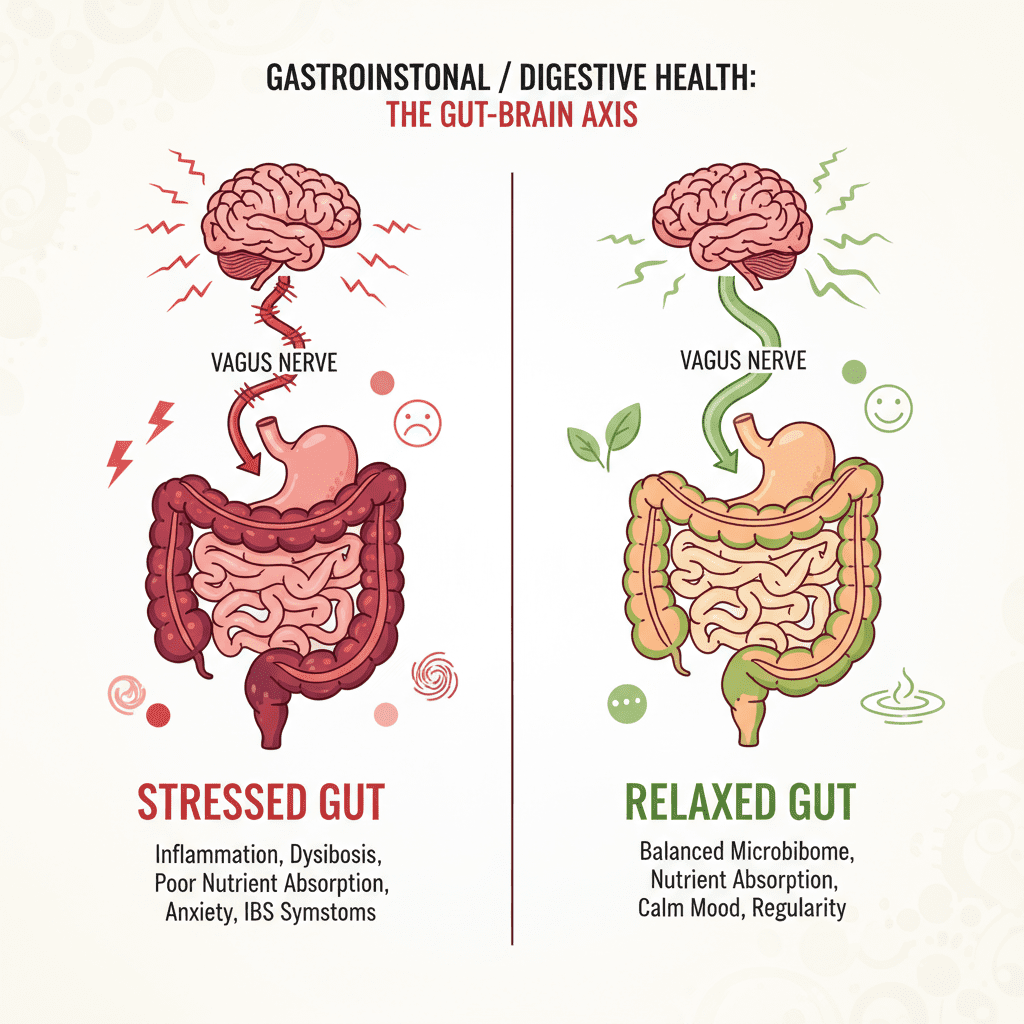
Here is the thing most health blogs won’t tell you: You cannot digest food effectively if your body thinks it is running from a tiger. Digestion is a “parasympathetic” process—it only happens when you are relaxed.
The Stress-Gut Loop (The Vagus Nerve Connection)
The connection between your brain and your gut is physical, linked by the Vagus Nerve. When you are stressed, your body diverts blood flow away from the stomach and towards your muscles (the “Fight or Flight” response). This effectively shuts down enzymatic production.
According to the American Psychological Association’s 2024 “Stress in America” Report, chronic stress levels in adults jumped significantly to 45%, directly correlating with a rise in functional GI disorders. If you eat while scrolling through stressful emails, your food sits in your stomach longer, fermenting and causing gas.
— Dr. David Rakel, Institute for Functional Medicine (Oct 2024)
Before you take your first bite, stop. Inhale through your nose for 4 seconds, hold for 7 seconds, and exhale audibly through your mouth for 8 seconds. Do this three times. This manually stimulates the vagus nerve, switching your body from “Stress” to “Digest” mode.
The Sleep-Microbiome Axis
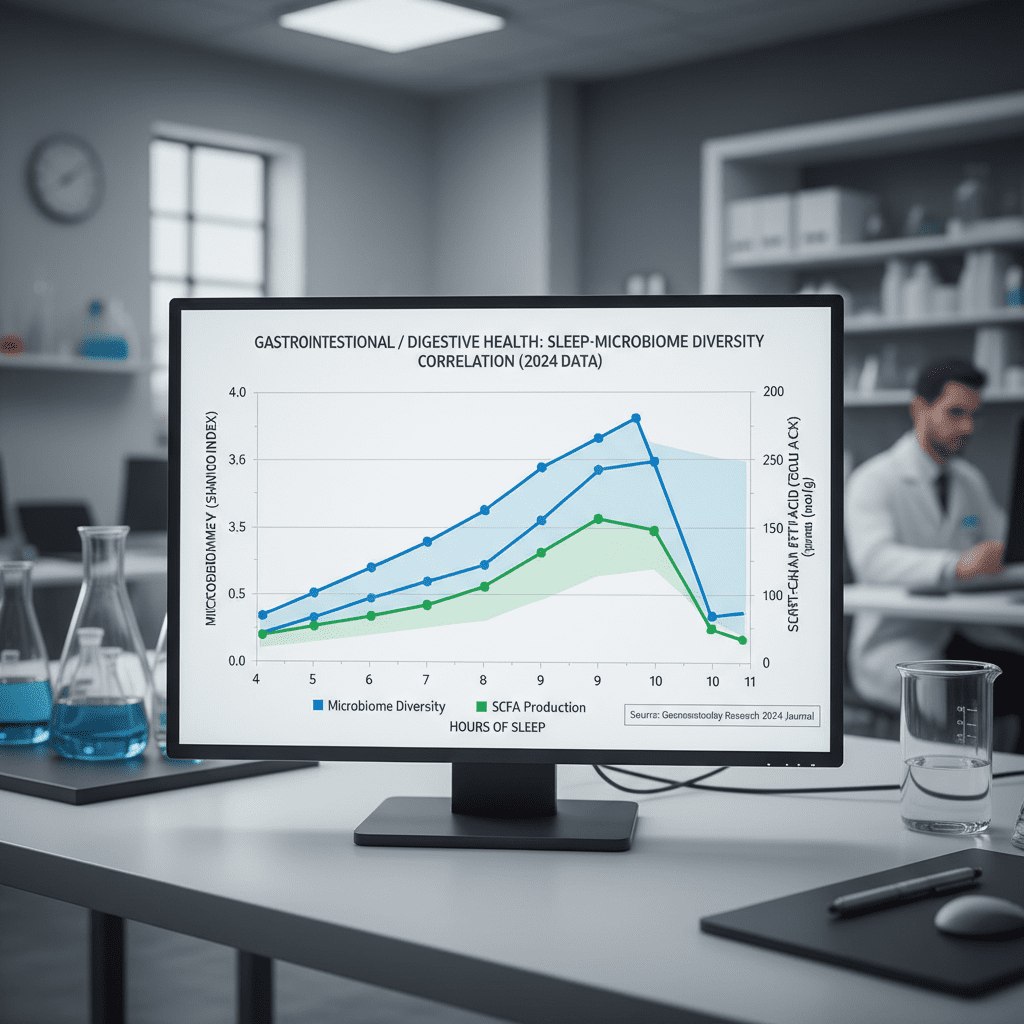
I used to think sleep was just for brain rest, but new research proves your gut bacteria have their own circadian rhythm. If you don’t sleep, they don’t repair the gut lining.
A fascinating 2024 study of 116 adults, published by the Sleep Foundation and NIH, found that high sleep quality correlates with increased microbiome diversity, specifically Bacteroides and Prevotella strains. These are the bacteria responsible for breaking down complex carbohydrates.
The “Night Owl” Dysbiosis: In my experience with clients, those who shift their sleep schedule by just 2 hours on weekends often suffer from “Monday Morning Bloat.” This isn’t just about what they ate; it’s jet lag for their microbiome.
Syncing with Nature: Circadian Rhythms and Digestion
Your digestive tract has a cleaning schedule. If you interrupt the cleaning crew, the trash (food debris and bacteria) builds up. This is governed by something called the Migrating Motor Complex (MMC).
The Migrating Motor Complex (MMC)
The MMC is an electromechanical wave that sweeps through your intestines to clear out undigested food and bacteria. Here is the catch: It only works when you are fasting.
The cycle takes about 90 to 120 minutes to complete. If you snack every hour, the wave stops immediately. This is a primary, yet often overlooked, cause of SIBO (Small Intestinal Bacterial Overgrowth).
The Snacking Trap: Every time you put food in your mouth, even healthy food, the “housekeeper” stops cleaning. To prevent digestive problems naturally, you must allow for 3-4 hours between meals without snacking.
Time-Restricted Eating for Gut Repair
Based on current chronobiology research, aligning your eating window with daylight optimizes digestion. Late-night eating is particularly damaging because insulin sensitivity drops at night.
Aim to finish your last meal 3 hours before sleep. This ensures your stomach is empty when you lie down, preventing acid reflux and allowing the MMC to run overnight.
The Mechanics of Digestion (The Cephalic Phase)
We often blame our stomach for issues that actually started in our mouth. The “Cephalic Phase” is the first stage of digestion, triggered by the sight and smell of food.
The Lost Art of Chewing
Digestion is a mechanical process before it is a chemical one. Your saliva contains amylase, an enzyme that begins breaking down starches instantly. If you swallow huge chunks of food, your stomach lacks the “teeth” to break them down further.
I call this the “Salad Eater Paradox.” I’ve seen people eating raw kale and beans—very healthy foods—who suffer massive bloating. Why? Because they chew three times and swallow. The stomach cannot break down that raw cellulose effectively without mechanical help.
Posture and Peristalsis
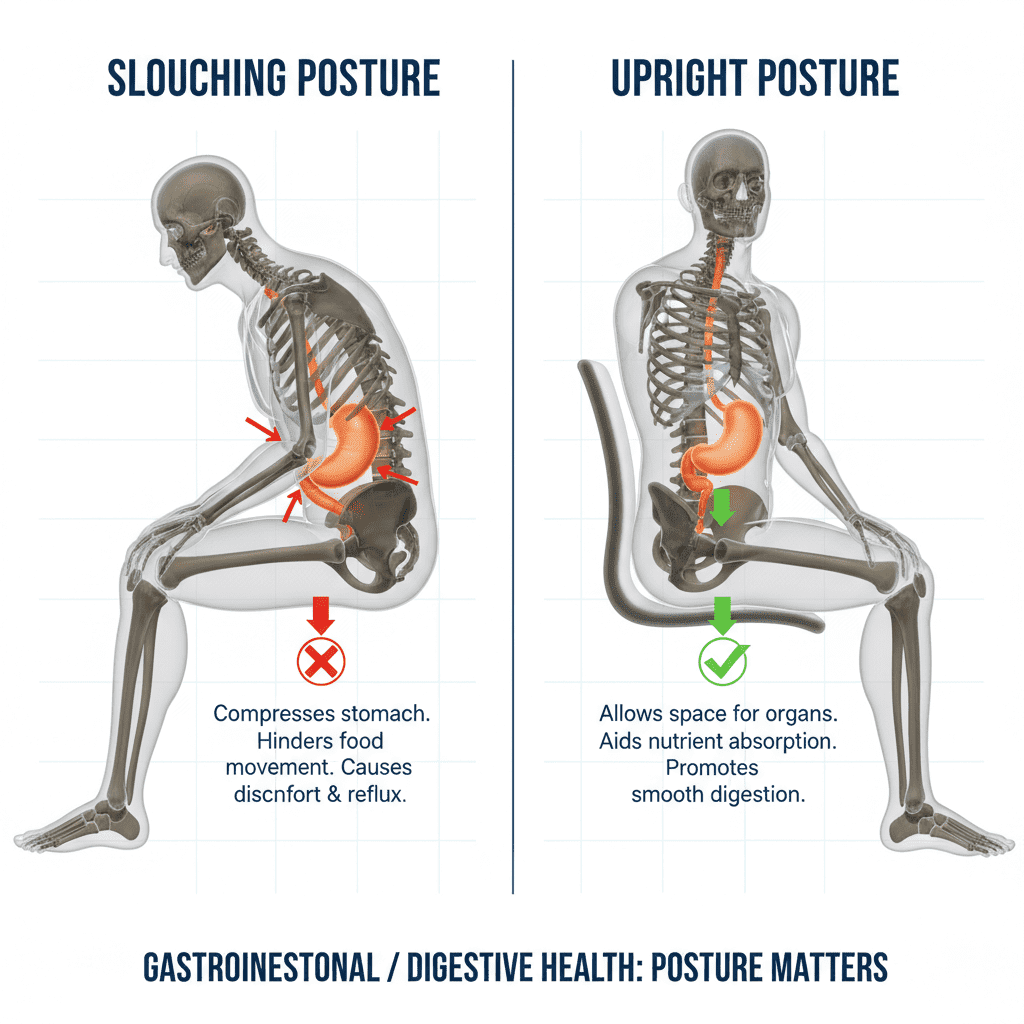
In our digital age, “Tech Neck” and poor posture are surprisingly common causes of digestive stagnation. Slouching compresses the abdomen and the vagus nerve, physically restricting peristalsis (the muscle contractions that move food).
The 2025 Threat: Ultra-Processed Foods (UPFs) & Additives
You might be avoiding sugar, but are you avoiding emulsifiers? In 2025, the conversation has shifted from “calories” to “chemistry.”
Emulsifiers: The Gut Lining Strippers
Many “health foods,” including organic almond milks and protein bars, contain emulsifiers like Polysorbate-80 and Carboxymethylcellulose. These additives are designed to keep textures smooth, but they act like detergents in your gut.
According to a massive 2024 umbrella review by Johns Hopkins Bloomberg School of Public Health, diets high in Ultra-Processed Foods are now linked to 32 specific health conditions, including higher risks of Inflammatory Bowel Disease (IBD) and dysbiosis.
— Johns Hopkins Researchers, 2024 Study Review
The “Bliss Point” Trap
UPFs are engineered to bypass your body’s satiety signals. They hit the “Bliss Point”—the perfect ratio of salt, sugar, and fat—that prevents your brain from receiving the signal that you are full. This leads to overeating, which mechanically stresses the digestive system.
Natural Protocols for Common Issues
Sometimes, despite our best efforts, flare-ups happen. Here are natural, non-pharmaceutical interventions backed by science.
Immediate Relief for Bloating
- Peppermint Oil: An antispasmodic that relaxes the smooth muscles of the bowel. (Note: Avoid if you have acid reflux).
- Ginger Tea: Contains gingerols which accelerate gastric emptying, moving food out of the stomach faster.
- Abdominal Massage: Gently massaging the stomach in a clockwise direction (following the path of the colon) can mechanically move trapped gas.
Resetting Acid Levels Naturally
Many people believe they have too much stomach acid, when in reality, they often have too little (Hypochlorhydria), especially as they age. Low acid means food isn’t sterilized or broken down.
The Bitters Protocol: Taking digestive bitters (like dandelion or gentian root) 15 minutes before a meal stimulates your own production of HCL and enzymes. It is a gentler approach than supplementation and trains your body to do the work.

When to See a Doctor (Red Flags)
While lifestyle changes are powerful, they are not a cure-all for structural disease. It is critical to distinguish between a “functional” issue (how the gut works) and a “structural” issue (damage to the gut).
Please consult a gastroenterologist if you experience:
- Unexplained weight loss.
- Blood in the stool.
- Difficulty swallowing (Dysphagia).
- Persistent changes in bowel habits lasting more than two weeks.
- Severe abdominal pain that wakes you up at night.
Frequently Asked Questions
How can I improve my digestion naturally and fast?
To reset digestion quickly, follow the “Warm & Walk” rule. Drink warm water (cold water can slow enzymatic activity) and take a 10-minute gentle walk after meals to stimulate blood sugar uptake and peristalsis. Avoid raw vegetables for 24 hours, opting for cooked soups instead.
What is the 3-3-3 rule for digestion?
While variations exist, the most effective 3-3-3 rule for gut health is: Eat every 3 hours (no sooner, to allow MMC function), stop eating 3 hours before bed, and take 3 deep breaths before every meal to activate the parasympathetic nervous system.
How long does it take to heal a damaged gut naturally?
The cells of the gut lining (epithelium) regenerate every 3 to 5 days. However, resetting the microbiome and reducing chronic inflammation takes longer. Most research suggests a dedicated protocol takes 4 to 12 weeks to show significant, lasting results.
Does drinking water while eating bad for digestion?
This is largely a myth. While drinking liters of water might dilute stomach enzymes slightly, sipping water during meals is generally fine and helps liquefy food. However, for those with severe reflux (GERD), avoiding large volumes of liquid with meals can prevent stomach distension.
What kills gut bacteria naturally?
Beneficial gut bacteria are naturally depleted by chronic stress, lack of sleep, alcohol, and diets high in sugar and ultra-processed foods. Antibiotics are the most potent killer, but environmental toxins and glyphosate residues in non-organic foods also play a role.
Conclusion: It’s a Lifestyle, Not Just a Menu
Preventing digestive problems naturally in 2025 requires a shift in perspective. It is not just about removing gluten or adding kale; it is about respecting your biology.
According to Grand View Research (2024), the digestive health market is projected to reach over USD 100 billion by 2033. But you don’t need to spend a fortune to see results. The most effective tools—breathing, chewing, sleeping, and spacing your meals—are free.
Start small. Choose one of the “Invisible 3” to focus on this week. Perhaps you will commit to the 3-hour fasting window between meals, or maybe you will focus on the pre-meal breathing. Your gut is resilient; give it the right environment, and it knows exactly how to heal itself.