
The Gut-Brain Connection: Decoding How Your Microbiome Impacts Mental Clarity [New Insights 2025]
You don’t just think with your head. If you’ve ever felt a “gut feeling” before a big decision or felt butterflies before a presentation, you’ve experienced the Microbiota-Gut-Brain Axis (MGBA) in real-time. But until very recently, we thought this was a slow, chemical process.
We were wrong.
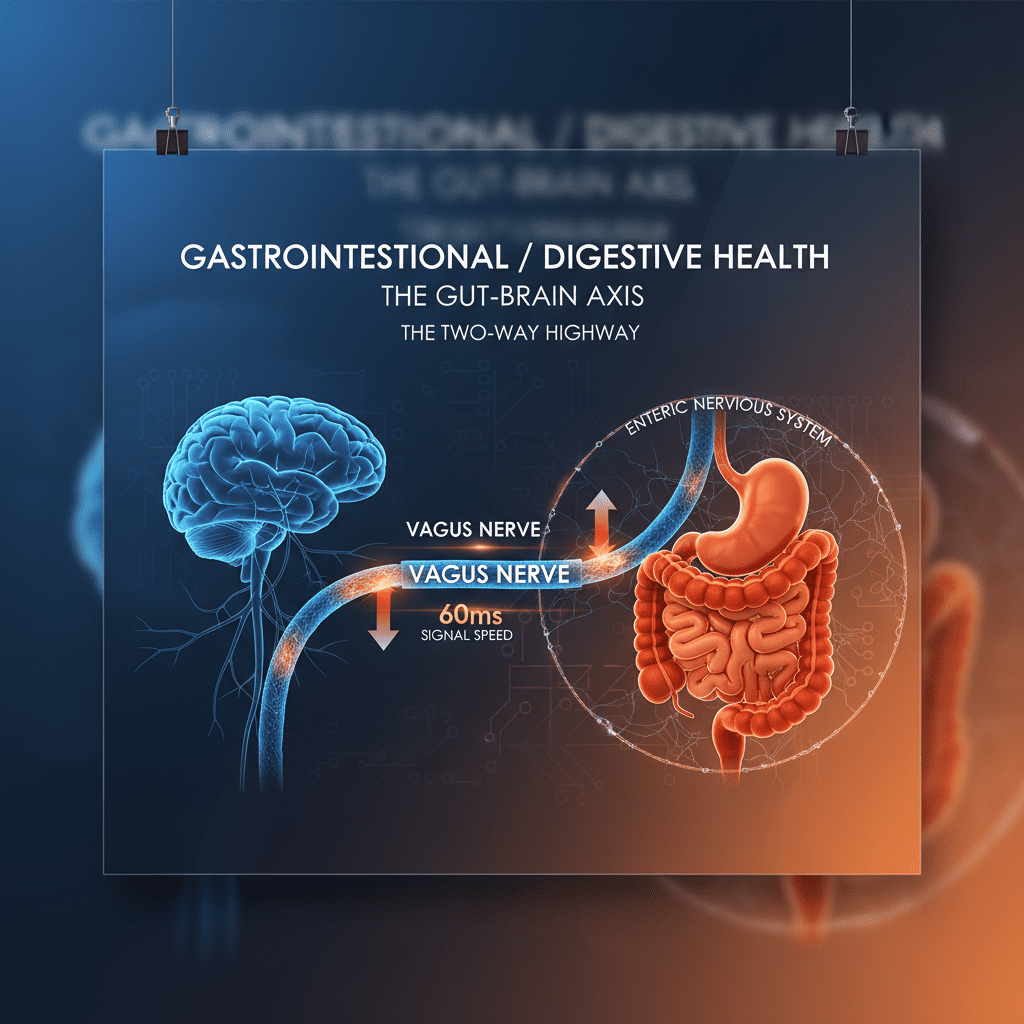
New 2025 research has fundamentally shifted our understanding of how our biology dictates our focus. According to a March 2025 report by GlobalRPH, signals from gut enteroendocrine cells reach the brainstem via the vagus nerve in as little as 60 to 800 milliseconds. Think about that for a second. That is a near-instant neural link. Your gut isn’t just digesting your lunch; it is actively signaling your brain to either focus or fog up, almost faster than you can blink.
If you are struggling with mental clarity, anxiety, or an inability to focus, the problem might not be in your skull—it might be in your sandwich. This guide decodes the latest 2025 research to help you biohack your gut for superior cognitive performance.
The “Second Brain” Explained: Mechanics of the Axis
To hack the system, you first have to understand the machinery. The gut-brain connection isn’t a metaphor; it’s a physical and chemical superhighway connecting your Enteric Nervous System (ENS) directly to your Central Nervous System (CNS).
The Vagus Nerve Superhighway
The vagus nerve is the longest cranial nerve in the body, wandering from your brainstem to your colon. For years, we knew it regulated digestion. However, a breakthrough 2025 study from UCLA has proven a causal chain we only suspected before. Researchers found that specific gut metabolites—specifically bile acids and Short-Chain Fatty Acids (SCFAs)—directly spark vagal neurons.
According to Neuroscience News, this “Vagus Nerve Trigger” mechanism allows the microbiome to regulate brain signals instantaneously. When your gut bacteria are thriving, they send rapid “all clear” signals to the brain, promoting a state of calm focus. When dysbiosis (imbalance) occurs, the signal changes to one of alarm, triggering cortisol and brain fog.
Chemical Messengers: The Serotonin Factory
Here is a statistic that usually shocks my clients: Approximately 90% of your body’s serotonin and 50% of its dopamine are produced in the gut, not the brain. These are your primary neurotransmitters for mood and motivation.
Dr. Nicole Avena, Assistant Professor of Neuroscience at Mount Sinai School of Medicine, puts it perfectly: “The gut-brain axis has been linked to the health and diversity of our microbiome – meaning the less diverse the diet, the more mental and brain health can suffer.” If your gut “factory” is shut down due to inflammation, your brain simply doesn’t receive the raw materials it needs to feel happy or focused.
The Oral-Brain Axis: The 2025 Missing Link
Here is where most generic advice fails. Competitors will tell you to eat yogurt and move on. But new 2024-2025 research has uncovered a new player: the Oral Microbiome.
We often forget that digestion starts in the mouth. A groundbreaking study highlighted by News-Medical in June 2024 found that older adults with higher oral microbiome diversity were 2.4 times more likely to have better cognitive function scores. If you are swallowing millions of pathogenic bacteria from poor oral hygiene every day, you are constantly seeding your gut with inflammation that eventually clouds your thinking.
Why “Dysbiosis” is Killing Your Focus
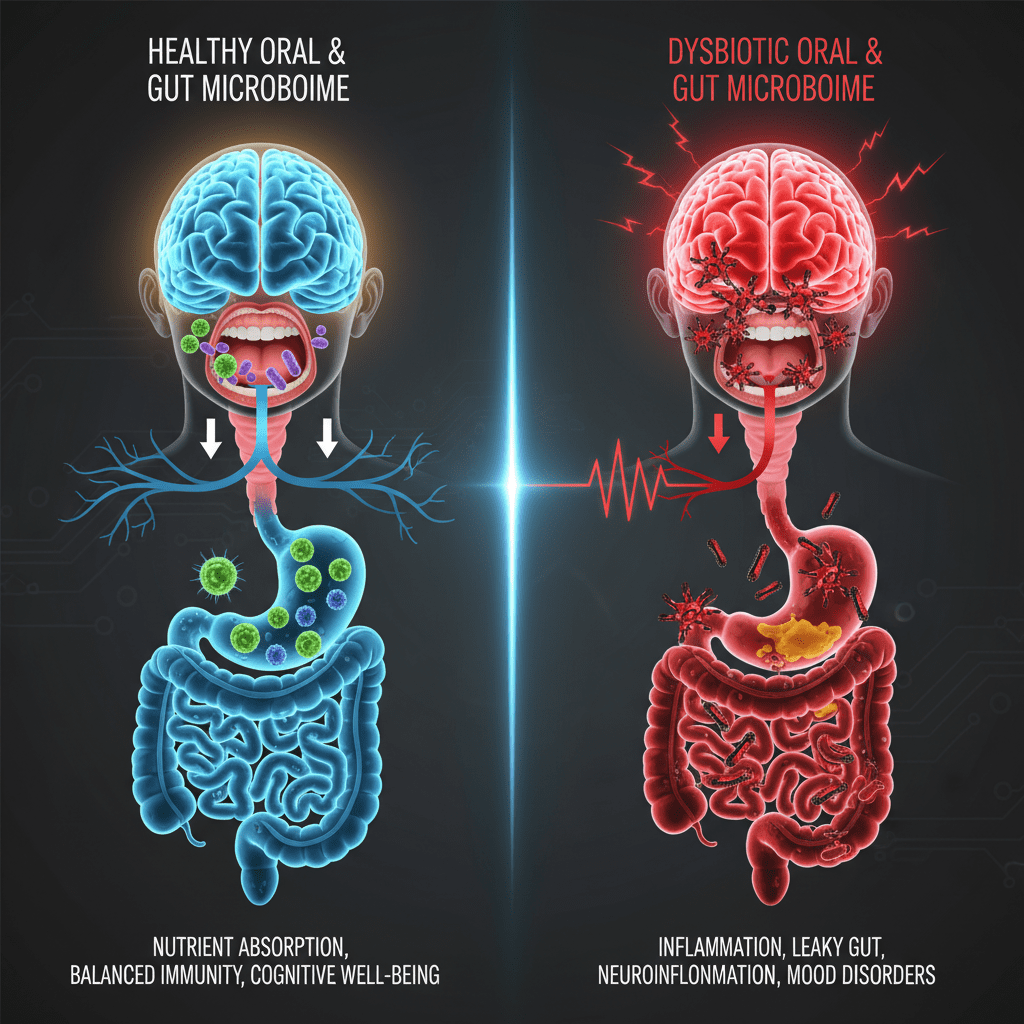
You might be asking, “If this system is so smart, why can’t I focus?” The answer usually lies in dysbiosis—an imbalance where harmful bacteria outnumber the beneficial ones.
Leaky Gut, Leaky Brain
When pathogenic bacteria take over, they damage the lining of the intestinal wall. This allows toxins and undigested food particles to escape into the bloodstream—a condition often called “Leaky Gut.” But the damage doesn’t stop there.
These toxins trigger an inflammatory cytokine storm. Once these inflammatory markers hit the blood, they can compromise the Blood-Brain Barrier (BBB). I often tell my readers: Leaky Gut leads to Leaky Brain. This neuroinflammation disrupts communication between neurons, resulting in that feeling of “cotton wool” in your head, memory lapses, and mental fatigue.
The SCFA Shortage
Your brain runs on glucose, but your gut-brain signaling relies heavily on Short-Chain Fatty Acids (SCFAs), specifically butyrate and propionate. These are produced when good bacteria ferment fiber.
According to a July 2025 study published in NIH/PubMed, plasma concentrations of propionate and butyrate are significantly lower in patients with Major Depressive Disorder compared to healthy controls. If you aren’t eating enough prebiotic fiber, your internal pharmacy runs out of stock, and your mental clarity pays the price.
Precision Psychobiotics: The 2025 Gold Standard Strains
The market for gut health is exploding, with supplement launches supporting the gut-brain axis increasing by 25% CAGR between 2019 and 2024, according to Nutrition Insight. But not all probiotics are created equal. Taking a generic “50 Billion CFU” capsule is like throwing seeds on concrete and hoping for a forest.
In 2025, we focus on Precision Psychobiotics—specific strains clinically proven to impact neurology.
The “Focus Trinity” Strains
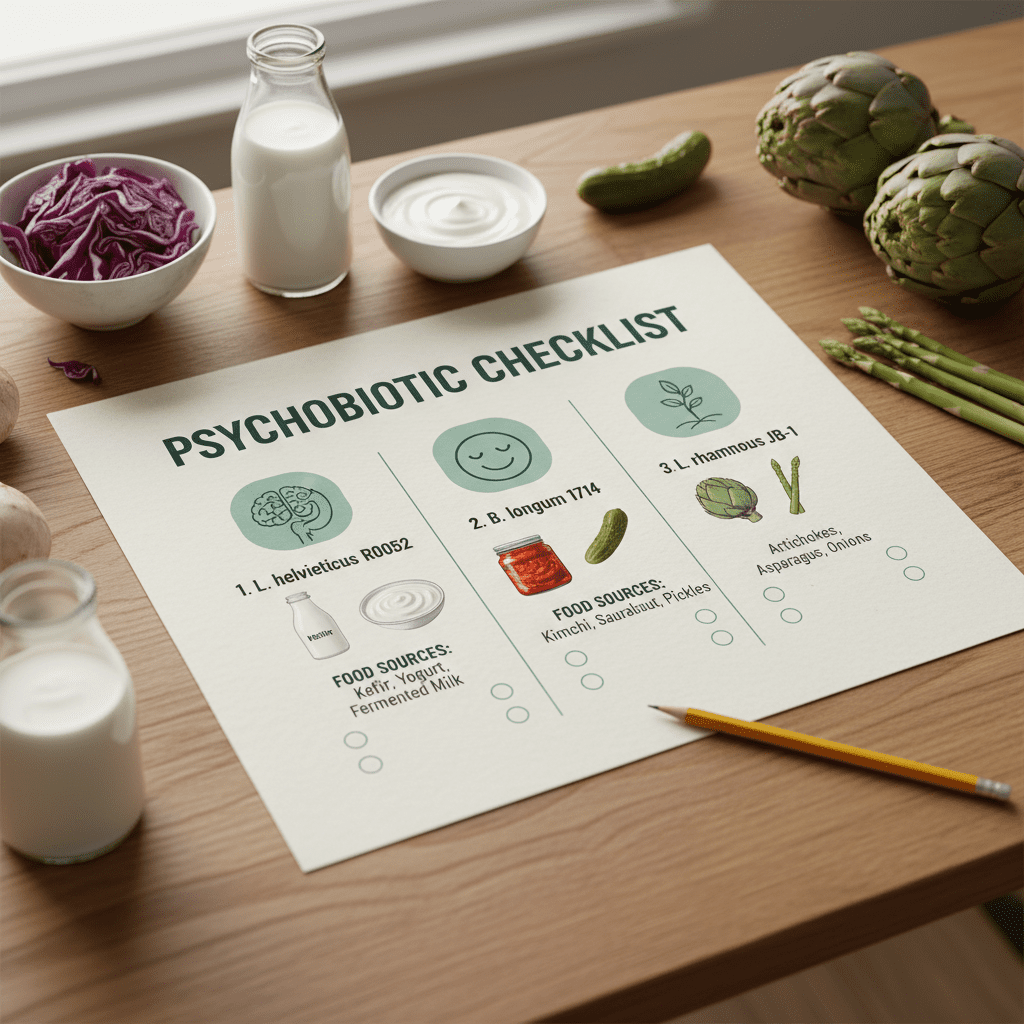
If you are looking for supplements, ignore the marketing fluff and look for these specific codes on the back of the bottle. According to a 2025 scientific review by PRObiom, these are the most effective strains:
- Lactobacillus helveticus R0052 (The Stress Shield): Proven to reduce cortisol levels and improve emotional balance. This is your defense against high-stress burnout.
- Bifidobacterium longum 1714 (The Focus Booster): Studies suggest this strain can modulate neural oscillations, effectively helping your brain stay in a “flow state” longer.
- Lactobacillus rhamnosus JB-1 (The GABA Generator): Known to stimulate the production of GABA, the neurotransmitter responsible for calmness and relaxation.
I recently reviewed a 2024 randomized trial referenced by NutraIngredients which showed that multi-strain probiotics slowed cognitive decline and reduced oxidative stress in patients with Alzheimer’s. While you may not be fighting Alzheimer’s, the implication for general cognitive preservation is massive.
The Protocol: Biohacking Your Gut for Instant Clarity
So, how do we fix it? Based on the data, I’ve developed a protocol that moves beyond simple dieting into active microbiome management.
1. The “Psychobiotic Diet”
It’s not just about what you remove (sugar, processed foods); it’s about what you add. To fuel the specific bacteria that communicate with your vagus nerve, you need polyphenols and fiber.
- Fermented Foods: Kimchi, Sauerkraut, and Kefir provide live inoculation of beneficial bacteria.
- Prebiotic Fibers: Garlic, onions, asparagus, and slightly green bananas. These are the “fertilizer” for the bacteria.
- Polyphenols: Dark chocolate (85%+) and berries. These compounds preferentially feed the bacteria that lower neuroinflammation.
2. Intermittent Fasting for Diversity
Fasting isn’t just for weight loss; it’s a cleaning crew for your gut lining. Giving your digestive system a 14-16 hour break allows a specialized bacterium called Akkermansia muciniphila to thrive. This bacteria strengthens the gut lining, preventing that “leaky brain” phenomenon we discussed earlier.
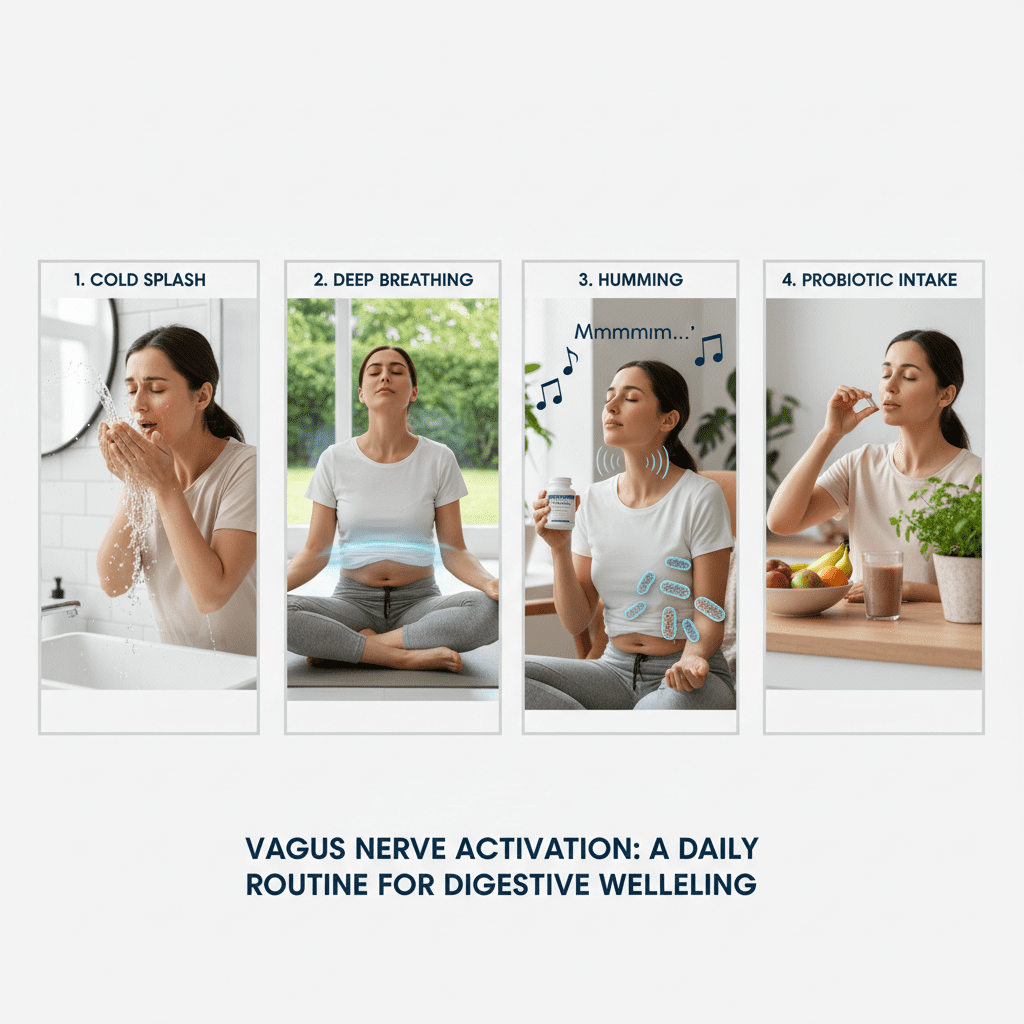
3. Vagus Nerve Activation Exercises
Since the highway runs both ways, you can manually stimulate the gut-brain connection. Kelly G. Jameson, PhD Researcher at UCLA, noted in 2025 that mice with restored microbiota showed improved vagal tone. You can mimic this improvement physically through:
- Cold Exposure: Ending your shower with 30 seconds of cold water shocks the vagus nerve into activation.
- Humming or Chanting: The vibration of the vocal cords stimulates the vagus nerve as it passes through the vocal box.
- Deep Diaphragmatic Breathing: Slow exhales (longer than inhales) physically massage the vagus nerve via the diaphragm.
Future Frontiers: AI and Microbiome Mapping
We are currently standing on the edge of a new era. By the end of 2025, personalized microbiome testing combined with AI analysis will likely be the standard of care for mental health issues. Rather than guessing which probiotic you need, you will upload a sample, and an AI will draft a nutrition plan to specifically boost your dopamine or GABA production.
But you don’t need to wait for the future to start. The tools available right now—specific strains, dietary changes, and vagus nerve work—are powerful enough to make a tangible difference today.
Frequently Asked Questions
Patience is key here. According to a projected November 2025 review in NIH/PubMed, probiotic supplementation improved cognitive function scores (MoCA) significantly after 12 weeks of consistent use. While some people feel digestive relief in days, neural changes take time.
While “cure” is a strong word, the link is undeniable. By reducing gut inflammation and increasing GABA production via strains like L. rhamnosus, you can significantly lower the physiological threshold for anxiety. It treats the biological root, not just the symptom.
In the context of the gut-brain axis, fermented foods take the crown. A daily serving of sauerkraut or kimchi provides both the probiotics (bacteria) and prebiotics (fiber) necessary to jumpstart the vagus nerve connection.
Conclusion: Trust Your Gut
The days of viewing the brain as an isolated organ are over. The research from 2024 and 2025 is clear: your mental clarity, your ability to handle stress, and your long-term cognitive health are deeply rooted in the ecosystem living within you.
If you’ve been chasing productivity hacks but ignoring your diet, you’ve been trying to run a high-performance software on broken hardware. Start small. Introduce L. helveticus or B. longum. Eat more fermented foods. Hum on your way to work. The 60-millisecond connection is always active—make sure it’s sending the right message.