
Sleep Your Way to Better Digestion: The Essential Connection & 4 Actionable Steps [Science-Backed]
You’re eating the right fiber. You’ve cut out processed foods. You’re taking high-quality probiotics. Yet, despite your best efforts, the bloating persists, the acid reflux strikes at 2 AM, and your gut just feels… off.
The missing link might not be on your plate—it’s likely in your pillow.
In my years analyzing health trends and medical literature, I’ve noticed a glaring gap in how we treat gut health. We focus obsessively on diet while ignoring the biological downtime required to process that food. But here is the reality: your gut has a clock, and if you aren’t sleeping, that clock breaks.
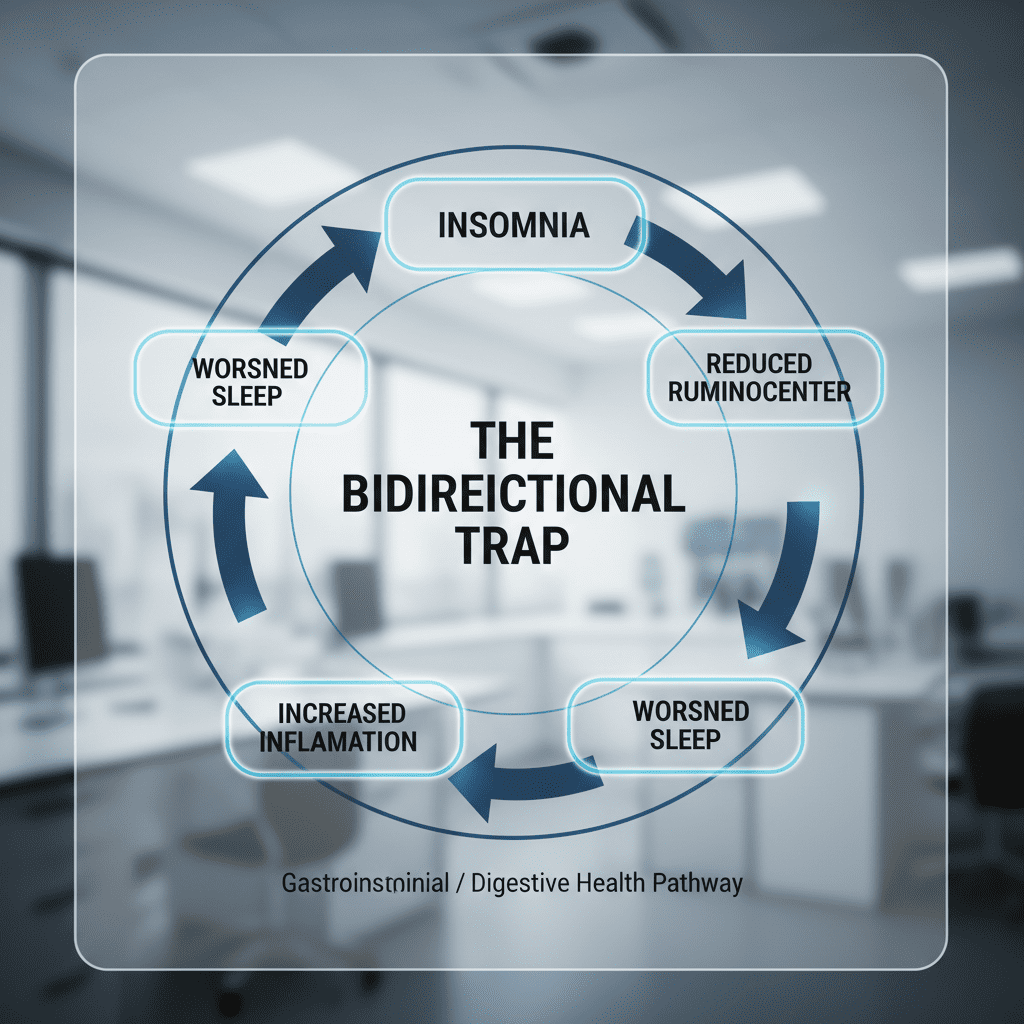
This isn’t just about feeling rested. New research emerging in late 2024 and 2025 has fundamentally changed our understanding of the sleep and digestion connection. We now know that the relationship is “bidirectional”—meaning poor sleep actively destroys your gut microbiome, and a poor microbiome actively ruins your sleep.
If you are ready to stop guessing and start healing, this guide bridges the gap between the latest gastrointestinal science and actionable sleep hygiene. Here is how to sleep your way to a healthier gut.
The New Science: How Your Gut and Sleep Talk to Each Other
For decades, we thought digestion was purely mechanical: you eat, you digest, you excrete. We now know it’s a complex neurological dance.
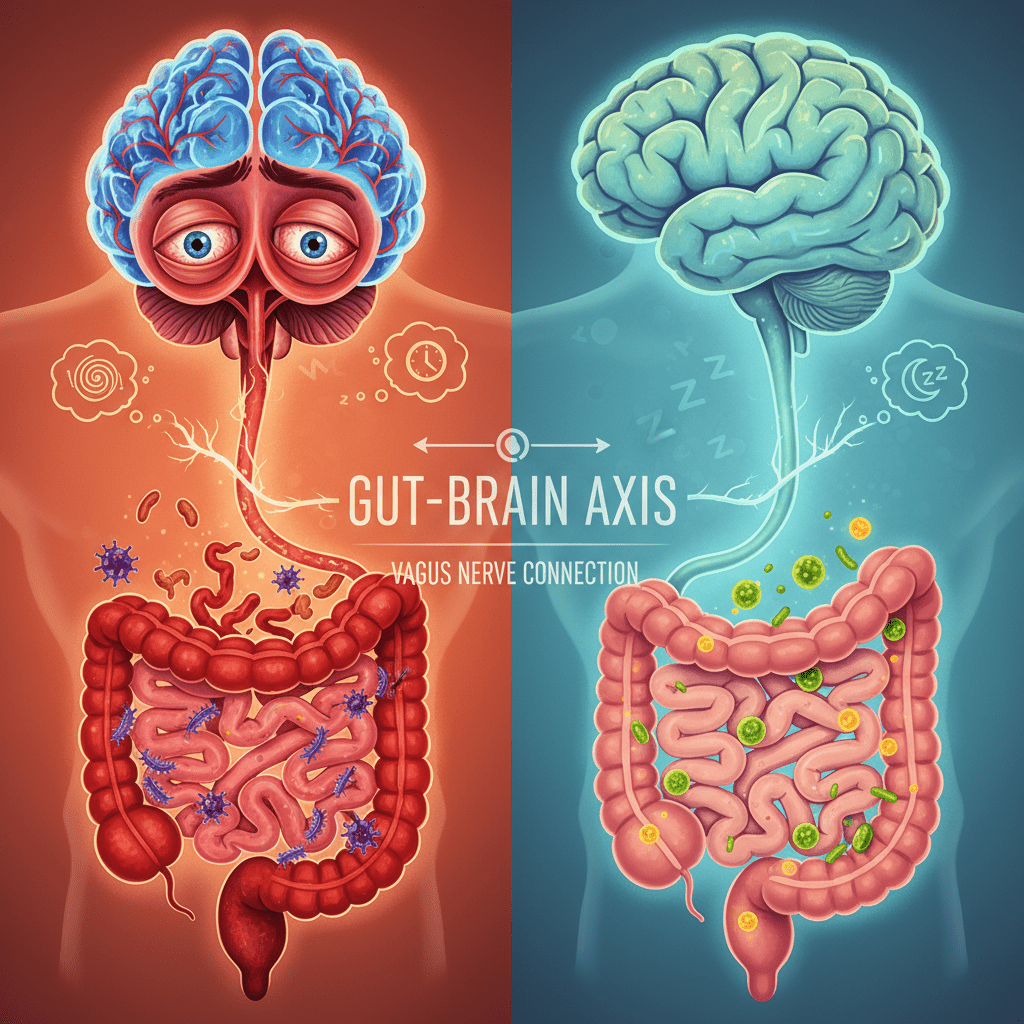
The Gut-Brain Axis & The Vagus Nerve
The connection starts with the vagus nerve, the longest cranial nerve in your body. Think of it as a fiber-optic cable running from your brainstem directly to your colon. It’s the “information superhighway” of the gut-brain axis.
When you are in a deep sleep, your brain sends signals via the vagus nerve to switch your digestion into “rest and digest” mode (parasympathetic state). If your sleep is fragmented, this signal is interrupted. The result? Your gut remains in a state of low-level stress, leading to inflammation and motility issues.
The “Microbial Clock” (2024 Breakthrough)
Here is where the science gets fascinating. We used to think only humans had circadian rhythms (our 24-hour internal clock). However, a groundbreaking study published in Science Advances (Sep 2024) revealed that your gut bacteria have their own circadian rhythms.
These microbes anticipate when you will eat and sleep. If you have an erratic sleep schedule, you essentially give your gut bacteria “jet lag.” This disruption accelerates issues like colorectal cancer progression and metabolic syndrome by altering the gut microbiome’s structure. When your microbes are confused, they stop producing essential compounds like short-chain fatty acids (SCFAs), which are crucial for reducing inflammation.
The Bidirectional Trap: New 2025 Data
Perhaps the most critical update comes from a study published in General Psychiatry (Aug 2025). Researchers found a causal link that flows both ways.
According to the study in General Psychiatry, insomnia is associated with a reduction of between 43% and 79% in the abundance of specific beneficial gut bacteria (specifically Ruminococcaceae).
This proves that you cannot fix your gut without fixing your sleep. Insomnia actively depletes the bacteria responsible for managing inflammation. It creates a vicious cycle: poor sleep kills good bacteria, and the lack of good bacteria increases anxiety and worsens sleep.
The Consequences of “Sleep Debt” on Digestion
What happens when we ignore this connection? The data is stark. Sleep debt doesn’t just make you groggy; it physically alters your digestive landscape.
According to a study published in BMC Gastroenterology (Sep 2025), patients with gastrointestinal disease had 70% higher odds of trouble sleeping compared with those without GI conditions. This isn’t a coincidence; it’s a physiological spiral.
Furthermore, lack of sleep triggers a spike in cortisol (the stress hormone). High cortisol increases visceral fat—the dangerous fat stored deep inside the belly, wrapped around your organs.
— Dr. Saurabh Sethi, Harvard-trained Gastroenterologist (Economic Times Interview, Nov 2025)
Additionally, data from the UK Biobank Cohort Study (reported May 2024) found that participants with a healthy sleep score had a 28% lower risk of developing any digestive disease over a 13-year period. The math is simple: Sleep is your cheapest, most effective digestive supplement.
4 Actionable Steps to Sleep Your Way to Gut Health
Understanding the science is step one. Now, let’s look at exactly how to apply this to your nightly routine. These aren’t just “sleep tips”—they are biological hacks to sync your gut and brain.
Step 1: Master the “Left Lateral Decubitus” Position
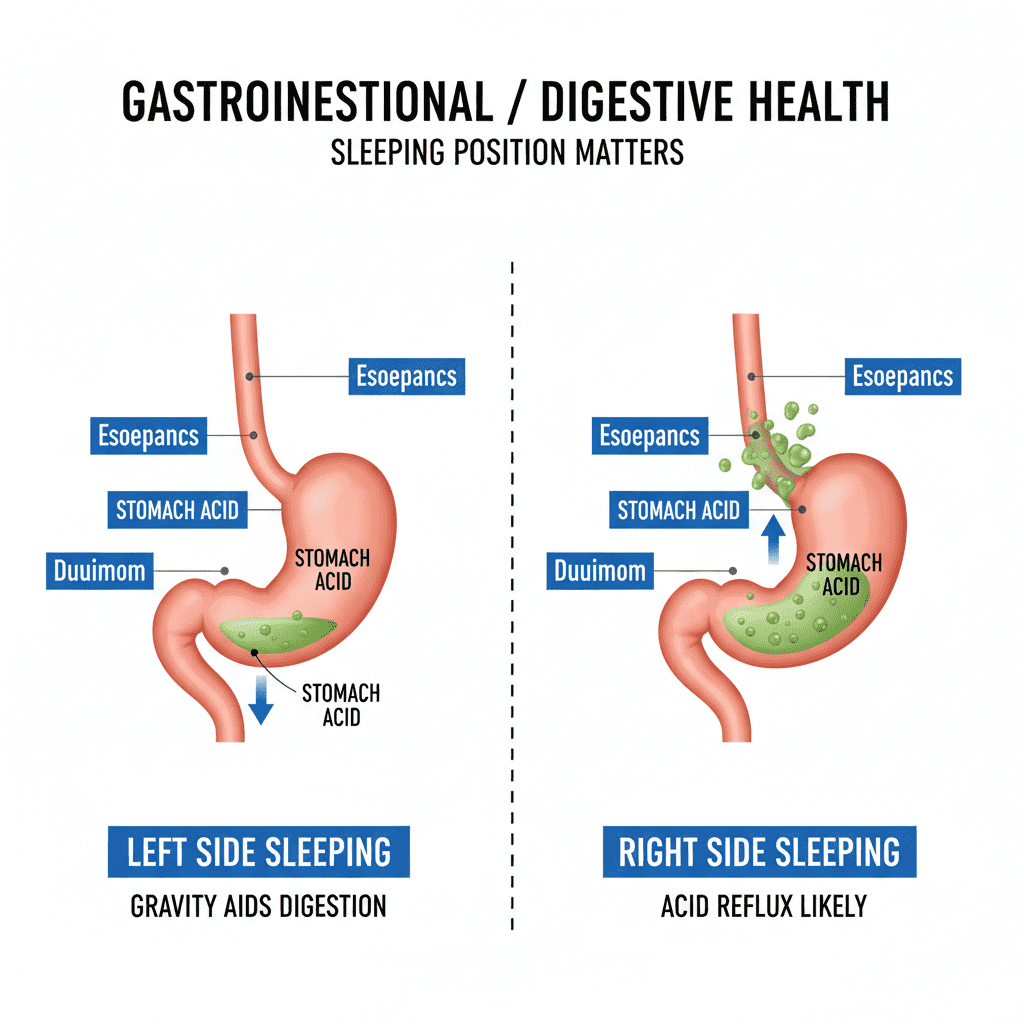
If you suffer from acid reflux, GERD, or slow digestion, your sleeping position is the first variable to change. The “best sleeping position for digestion” is scientifically proven to be the Left Lateral Decubitus position—simply put, sleeping on your left side.
The Anatomy of Gravity:
Your stomach is shaped like a curved “J” pouch. When you sleep on your right side, the stomach is positioned higher than your esophagus, allowing acid and food contents to leak back up (gravity works against you). When you sleep on your left side, the stomach hangs lower than the esophagus. Gravity keeps the acid in the “pouch,” preventing heartburn.
— Dr. Keith C. Summa, Gastroenterologist, Northwestern Medicine (HealthCentral, July 2024)
Action Plan:
- Start your night on your left side.
- Use a body pillow behind your back to prevent rolling over during deep sleep.
- If you have severe GERD, elevate your head 6 inches using a wedge pillow to further enlist gravity’s help.
Step 2: Sync Your Dinner with Your Circadian Rhythm
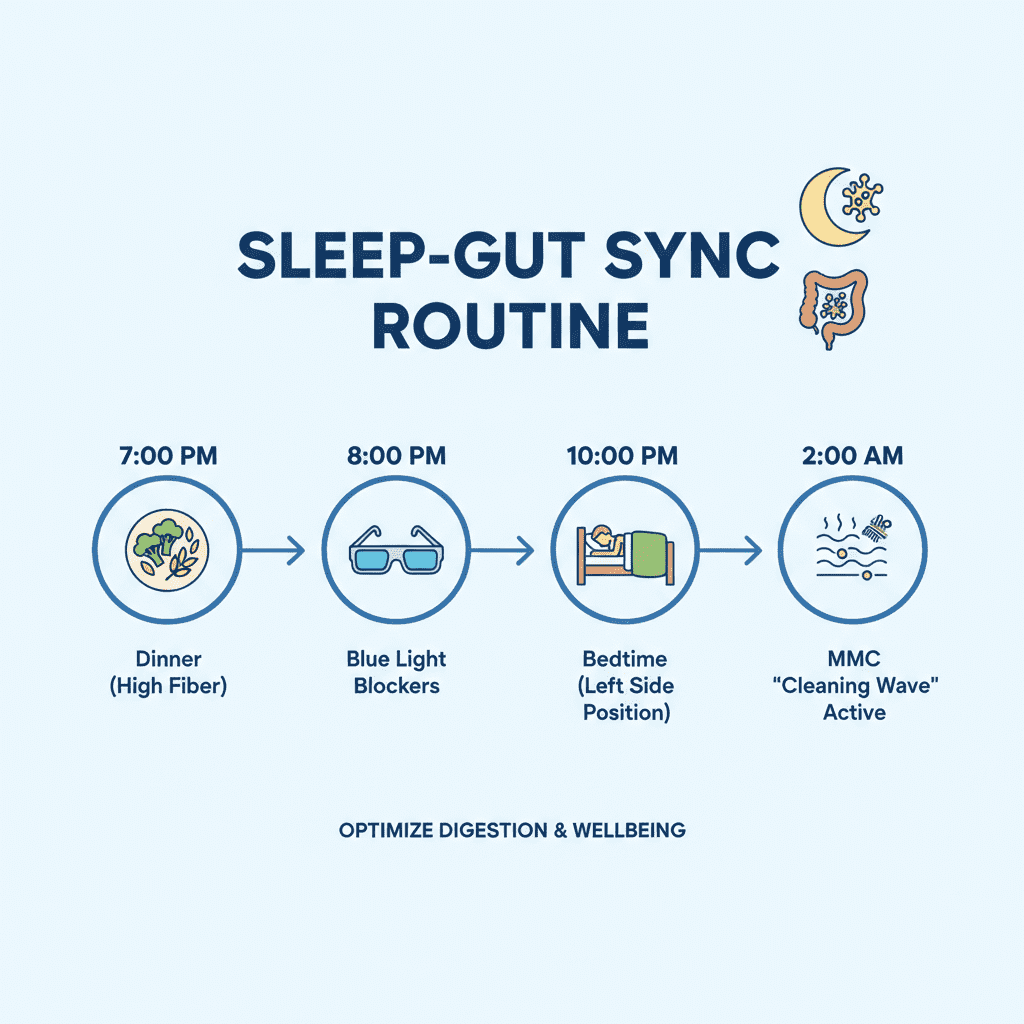
You’ve likely heard “don’t eat before bed,” but do you know why? It’s not just about calories; it’s about the Migrating Motor Complex (MMC).
The MMC is your gut’s housekeeper. It is an electromechanical wave that sweeps through your intestines every 90 to 120 minutes only when you are fasting. Its job is to push undigested food and bacteria into the colon. If you snack right before bed, you shut off the MMC. This leaves food rotting in your small intestine overnight, leading to Small Intestinal Bacterial Overgrowth (SIBO) and bloating.
The 3-Hour Rule:
According to 2024 guidance on circadian gut health, you must stop eating 3 hours before sleep. This allows gastric emptying to occur before you lie down.
Action Plan:
- If you sleep at 10:30 PM, finish eating by 7:30 PM.
- Avoid heavy fats and proteins in this last meal, as they delay gastric emptying time.
- Drink water, but stop fluids 1 hour before bed to prevent waking up to urinate, which fragments sleep cycles.
Step 3: The “Dark Gut” Protocol (Light Hygiene)
We usually associate melatonin with feeling sleepy, but melatonin is actually 400 times more abundant in the gut than in the brain. It acts as a major regulator of gut motility and inflammation.
Exposure to blue light (from phones, TVs, LEDs) late at night suppresses melatonin production. When you suppress melatonin, you aren’t just wrecking your sleep; you are depriving your gut of a critical anti-inflammatory hormone. This can lead to “gut permeability” or leaky gut.
Action Plan:
- Dim the lights: Two hours before bed, reduce ambient lighting.
- Blue Blockers: If you must use screens, use blue-light-blocking glasses.
- Pitch Black: Sleep in a room that is 100% dark. Even a small amount of light can disrupt the circadian signals to your microbiome.
Step 4: The Anti-Inflammatory Sleep Diet (DI-GM)
What you eat dictates how you sleep. A study published in Frontiers in Nutrition (2025) highlighted the importance of the Dietary Index for Gut Microbiota (DI-GM). This index measures how inflammatory a diet is based on its effect on gut bacteria.
Diets high in processed sugars and low in fiber increase inflammation cytokines, which are known to fragment sleep architecture (meaning you wake up more often). To sleep deeply, you need to feed the bacteria that produce sleep-supporting neurotransmitters like serotonin and GABA.
Action Plan:
- Dinner Ingredients: Focus on foods rich in tryptophan and magnesium (e.g., turkey, pumpkin seeds, spinach).
- Prebiotic Fiber: Include resistant starch (like cooled potatoes or green bananas) at dinner to feed beneficial bacteria without causing rapid fermentation.
- Avoid “The 3 Cs”: Caffeine, Chocolate, and Capsaicin (spicy food) within 4 hours of bed.
The “Double Detox”: Glymphatic System & MMC
I want to introduce you to a concept I call the “Double Detox.” When you achieve high-quality deep sleep, two miraculous cleaning systems activate simultaneously:
- The Glymphatic System: Your brain’s waste clearance system flushes out neurotoxins (like beta-amyloid).
- The Migrating Motor Complex (MMC): Your gut’s cleaning wave sweeps bacteria and debris into the colon.
These two systems work in harmony. If you cut your sleep short, you are essentially skipping the “rinse cycle” for both your brain and your gut. This explains why you wake up foggy and bloated after a poor night’s rest.
FAQ: Answering Your Burning Nighttime Questions
You should sleep on your left side (Left Lateral Decubitus). Because the stomach curves naturally to the left, this position creates a “gravity valve” that prevents stomach acid from rising into the esophagus, significantly reducing acid reflux and heartburn.
Ideally, you should stop eating 3 hours before sleep. This ensures your stomach has emptied its contents (gastric emptying) and allows the Migrating Motor Complex (MMC) to begin its cleaning cycle during the night to prevent bacterial overgrowth.
Yes. Sleep deprivation increases cortisol, which slows down digestion and disrupts the gut microbiome (dysbiosis). This imbalance leads to improper fermentation of food, resulting in increased gas, bloating, and even IBS flare-ups.
This is often linked to the “Cortisol Awakening Response” (CAR). If your sleep quality was poor, your body may produce an excessive spike in cortisol upon waking, which sensitizes the gut nerves (visceral hypersensitivity), leading to nausea or abdominal pain.
Conclusion: It’s About Rhythm, Not Just Rest
We have spent years treating sleep issues with sleeping pills and gut issues with laxatives, ignoring the obvious reality that these two systems are inextricably linked. The research from late 2024 and 2025 has closed the case: you cannot have a healthy gut without a healthy sleep cycle.
The “bidirectional” nature of this relationship is empowering. It means that by making small adjustments—sleeping on your left side, closing the kitchen three hours before bed, and respecting the dark—you can initiate a positive spiral. Better sleep feeds good bacteria. Good bacteria lower inflammation. Lower inflammation leads to deeper sleep.
Start tonight. Pick one of the four steps above—perhaps simply turning off the lights earlier or adjusting your pillow—and let your body’s natural rhythm take over. Your gut is waiting for the rest.