
Unlock Your Gut’s Power: The 10 Essential Keys to a Thriving Microbiome [2025 Edition]
Your gut is not just a digestion engine; it is your second brain, your immune command center, and a biological fingerprint that is entirely unique to you. For years, we treated the stomach like a simple furnace—put food in, get energy out. But recent 2024 and 2025 research confirms that no two microbiomes are alike, and the “old rules” of simply eating yogurt are woefully outdated.
In my years of analyzing health trends and nutritional science, I’ve never seen a shift as dramatic as what is happening right now. We are moving away from generic advice and toward a personalized revolution.
You might be feeling it yourself—that persistent bloating, the inexplicable brain fog, or fatigue that coffee can’t fix. You aren’t alone. But the solution isn’t another restrictive diet; it’s about cultivation. Forget generic advice. Here are the 10 scientifically proven keys to diversity, resilience, and vitality based on the latest 2025 data.
Table of Contents
- The Micro-Universe Within: Why the Rules Changed
- Key 1: The “30 Plant Points” Rule
- Key 2: Fermented Foods Over Pills
- Key 3: Eliminate the “Gut Assassins” (UPFs)
- Key 4: Chrono-Nutrition
- Key 5: Feed the “Psychobiotics”
- Key 6: The Postbiotic Payoff
- Key 7: Filter Your World
- Key 8: Sweat for Your Species
- Key 9: Sleep Hygiene as a Prebiotic
- Key 10: Personalized Testing
The Micro-Universe Within: Why the “Old Rules” Changed
For decades, we viewed bacteria as the enemy. We scrubbed, sanitized, and medicated them away. Now, we understand that we are actually hosts to a complex ecosystem. A massive study involving 34,000 individuals, published by ZOE / Nature Medicine (2024), found that specific gut microbes are more accurately linked to cardiometabolic health—like visceral fat and triglyceride levels—than your own genetics.
This means you have more control over your health destiny than you thought. But the ecosystem is delicate. A 6-year study by Stanford Medicine (2024) confirmed that your microbiome is stable over time but can be drastically disrupted by infection or major dietary shifts. The goal of 2025 isn’t just to “heal” the gut; it’s to build a fortress of diversity.
Key 1: The “30 Plant Points” Rule (Diversity is King)
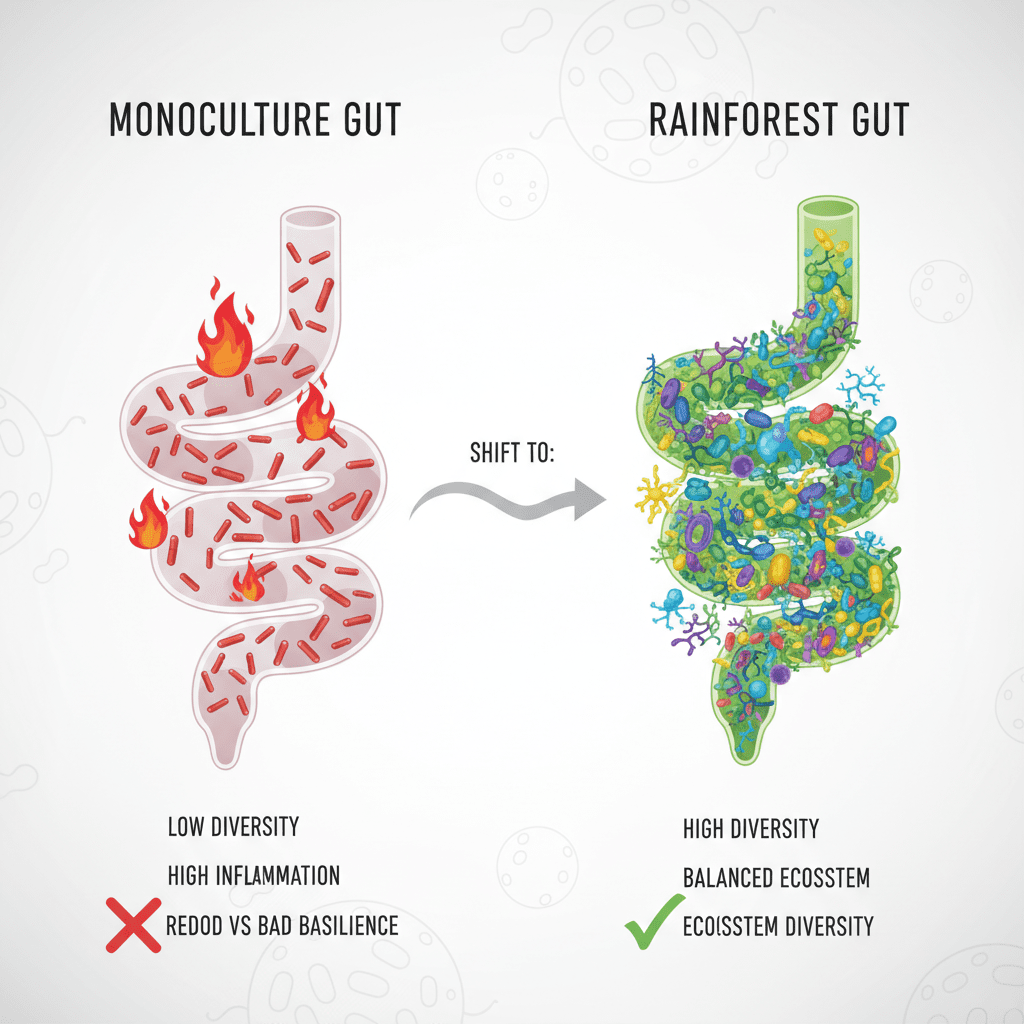
If you take only one thing away from this article, let it be this: Fiber supplements are not enough. You cannot out-supplement a monolithic diet.
The latest nutritional psychiatry and microbiome research centers on the “30 Plant Points” challenge. The premise is simple: people who eat 30 different types of plants per week have significantly more diverse gut bacteria than those who eat 10 or fewer.
Why Fiber Supplements Fail
Metamucil or psyllium husk provides a single type of fiber. That feeds a single type of bacteria. But you want a rainforest, not a cornfield. Different microbes prefer different fuel sources—pectin from apples, inulin from onions, resistant starch from cooled potatoes.
—
How to Hit 30 Different Plants Weekly
It sounds daunting, but it counts everything that grows from the ground. In my experience advising clients, the easiest way to hit this number is by using “mixes.”
- Seeds: Chia, flax, pumpkin, and sunflower seeds in your oatmeal count as 4 points.
- Herbs: Fresh parsley, cilantro, basil, and mint count.
- Spices: Turmeric, black pepper, and cinnamon count (¼ tsp minimum).
- Varieties: A red apple and a green apple are technically the same, but red pepper and yellow pepper often contain different polyphenol profiles. Aim for unique species.
Key 2: Fermented Foods Over Probiotic Pills
The probiotic supplement market was valued at $77.5 billion in 2024, yet many of those capsules die before they even reach your colon. The smarter, more effective strategy for 2025 is food, not pharmacy.
The Stanford Study: 6 Servings a Day
A landmark study re-validated in recent contexts by Stanford Medicine showed that eating a diet high in fermented foods for 10 weeks increased microbiome diversity and decreased 19 inflammatory markers. Surprisingly, the high-fiber group in the same study did not show this decrease in inflammation.
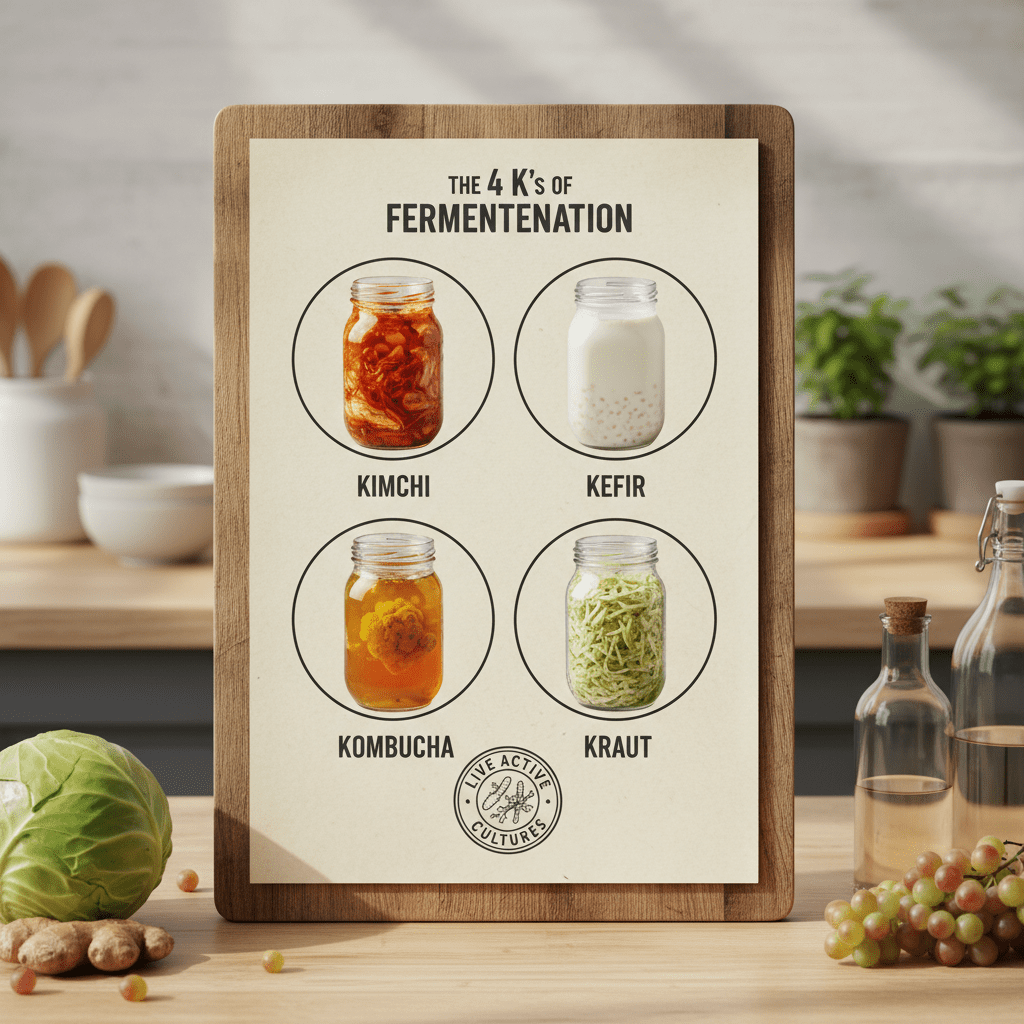
Kimchi, Kefir, and Kombucha: The Holy Trinity
I recommend starting slow. If you go from zero to six servings a day, you will experience severe bloating (the “die-off” reaction). Start with:
- Kefir: A fermented milk drink that is far more potent than yogurt.
- Kimchi/Sauerkraut: Ensure it is found in the refrigerator section, not the shelf-stable aisle. If it’s shelf-stable, the heat pasteurization killed the bacteria.
- Kombucha: Watch the sugar content. Look for brands with under 5g of sugar per serving.
Key 3: Eliminate the “Gut Assassins” (UPFs)
In 2025, the conversation has shifted from “sugar” to “structure.” We are now looking at Ultra-Processed Foods (UPFs) and, specifically, emulsifiers.
The New Danger: Emulsifiers and Additives
New 2024 research published in Institut Pasteur indicates that emulsifiers (like carboxymethylcellulose and polysorbate-80) directly disrupt the mucus barrier of the gut. This is the “lining” that prevents Leaky Gut.
Think of emulsifiers like soap. Just as dish soap strips grease off a pan, emulsifiers strip the protective mucus layer off your intestine. A review in News-Medical (March 2025) highlighted that high UPF consumption leads to the proliferation of Granulicatella (harmful bacteria) while reducing Roseburia (beneficial SCFA producers).
Key 4: Chrono-Nutrition: Sync Your Gut Clock
Your gut bacteria have their own circadian rhythm. They work in shifts. Some are active during the day to help digest food; others are active at night to repair the gut lining. If you eat late at night, you force the “day shift” to stay overtime, preventing the “night shift” from doing the repair work.
Why Late-Night Eating Destroys Repair Cycles
This emerging field is called Chrono-nutrition. Eating within a restricted window (Time-Restricted Eating or TRE) allows for the Migrating Motor Complex (MMC) to sweep the gut clean. This “cleaning wave” only happens when you are in a fasted state.
I usually advise clients to stop eating at least 3 hours before bed. This simple change often reduces morning bloating more effectively than any supplement.
Key 5: Feed the “Psychobiotics” (The Gut-Brain Axis)
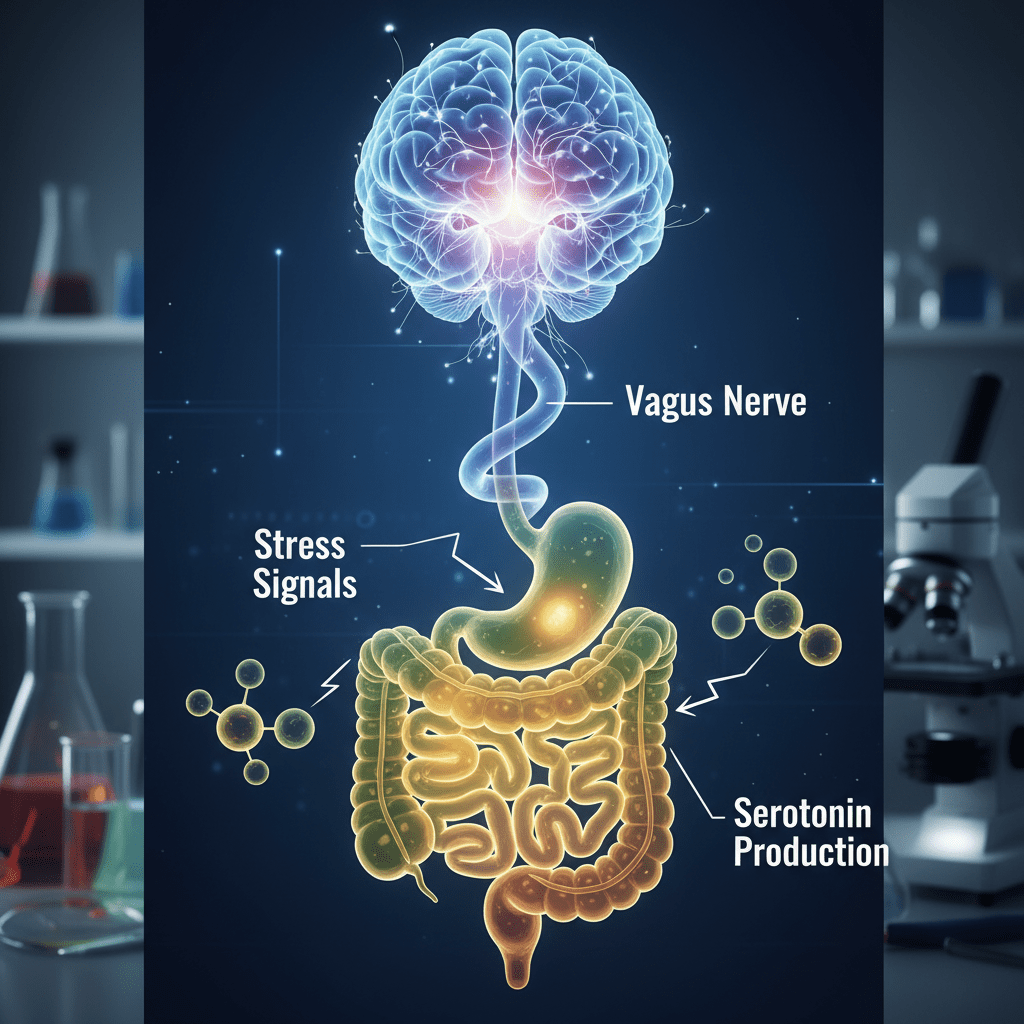
Have you ever had a “gut feeling”? That’s your enteric nervous system talking. The connection is physical, linked by the Vagus nerve.
Furthermore, COMET Bio (2024) reports that over 76% of consumers now recognize the direct link between gut health and mental wellness. We are entering the era of “Psychobiotics”—using gut health to treat anxiety.
Vagus Nerve Stimulation Techniques
You can physically tone your Vagus nerve to improve gut motility. Here are my favorite non-dietary methods:
- Cold Exposure: Ending your shower with 30 seconds of cold water.
- Humming or Singing: The vibration stimulates the nerve endings in the vocal cords, which connect to the Vagus nerve.
- Deep Diaphragmatic Breathing: Slow exhales signal safety to the gut.
Key 6: The Postbiotic Payoff
We’ve talked about Prebiotics (the fertilizer) and Probiotics (the seeds). Now, let’s talk about the harvest: Postbiotics.
Postbiotics are the bioactive compounds the bacteria produce when they digest fiber. The most critical one is Butyrate (a Short-Chain Fatty Acid). Butyrate is the primary fuel source for the cells lining your colon. Without it, those cells die, and inflammation runs rampant.
Resistant Starch Sources
To maximize Butyrate, you need Resistant Starch. This is starch that resists digestion in the stomach and makes it all the way to the colon.
- Cooked and Cooled Potatoes: Cooking a potato and then cooling it in the fridge for 24 hours changes its chemical structure, turning it into a superfood for your gut.
- Green Bananas: Unripe bananas are packed with resistant starch.
- Oats: Soaking oats overnight (Overnight Oats) preserves more resistant starch than boiling them.
Key 7: Filter Your World (Environmental Toxins)
It is impossible to discuss gut health in 2025 without mentioning the environment. Microplastics and pesticide residues (like Glyphosate) act as antibiotics in the gut.
While you can’t live in a bubble, you can reduce the load. A simple step is filtering your tap water. Chlorine is added to water specifically to kill bacteria. While this prevents cholera, drinking highly chlorinated water daily can subtly shift your microbiome balance.
My advice: Use a carbon block filter for your drinking water and, if possible, buy organic for the “Dirty Dozen” (fruits with thin skins like strawberries and grapes) to reduce pesticide intake.
Key 8: Sweat for Your Species (Exercise)
Cardio doesn’t just work your heart; it works your microbiome. Research consistently shows that athletes have significantly more diverse microbiomes than sedentary individuals.
Exercise increases the production of butyrate-producing bacteria. It basically “churns” the gut, aiding motility and preventing stagnation. However, beware of overtraining. Ultra-endurance events can actually cause “runner’s gut” (temporary leaky gut) due to stress. Moderate, consistent movement is key.
Key 9: Sleep Hygiene as a Prebiotic
This brings us back to the cycle. Poor sleep increases cortisol. High cortisol increases gut permeability (leaky gut). A leaky gut causes inflammation, which degrades sleep quality. It is a vicious cycle.
Prioritizing 7-8 hours of sleep is arguably as important for your microbiome as eating yogurt. If you are eating 30 plants a week but sleeping 4 hours a night, you will not see the results you want.
Key 10: Personalized Testing (The Future)
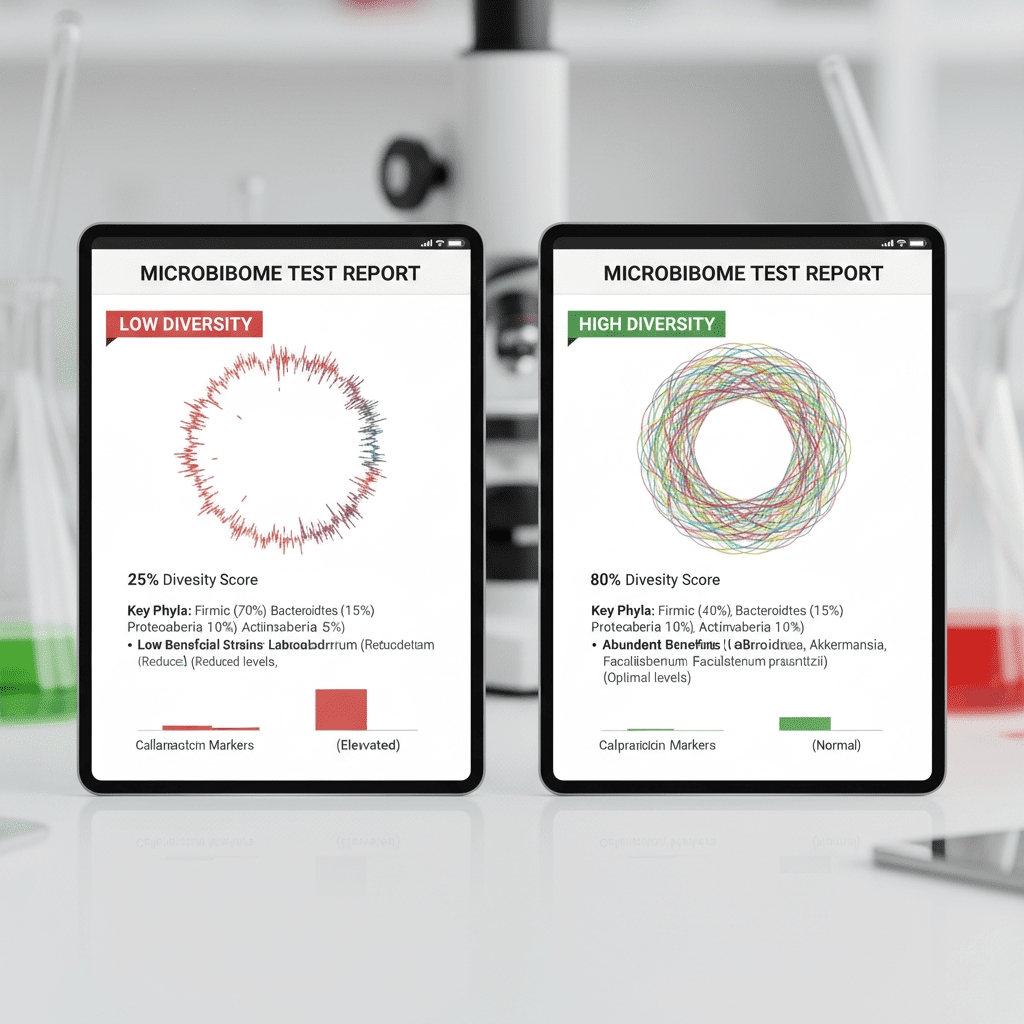
Finally, should you test your gut? In 2025, home testing kits (like ZOE, Viome, or GI-MAP) have become incredibly popular. But are they worth it?
—
My Verdict: If you have the budget, they provide fascinating data. Seeing that you have low levels of Bifidobacteria can be a great motivator to eat more fiber. However, a single snapshot can be misleading because your microbiome changes daily. If you test, plan to re-test in 3-6 months to track trends.
FAQs: Your Gut Health Questions Answered
How do I know if I have Leaky Gut?
While “Leaky Gut” (Intestinal Permeability) is hard to diagnose without a medical test, common signs include new food sensitivities, chronic bloating immediately after eating, skin issues like eczema, and “brain fog.” If you suspect this, focus on Key 3 (removing emulsifiers) and Key 6 (Butyrate production).
Can I heal my gut while taking antibiotics?
Antibiotics are life-saving but act like a forest fire in the gut. To mitigate damage: take Saccharomyces boulardii (a beneficial yeast unaffected by antibiotics) during the course, and flood your system with fermented foods and fiber immediately after the course is finished to re-seed the ground.
Does fasting improve gut microbiome diversity?
Short-term fasting (like 12-16 hours) is excellent for the “cleaning wave” (MMC). However, prolonged fasting (multi-day) can actually starve beneficial bacteria. The sweet spot seems to be Time-Restricted Eating (TRE).
Conclusion: The Era of Personalized Gut Health
The science of 2025 has made one thing clear: there is no magic pill. You cannot buy a perfect microbiome in a bottle. You have to build it, meal by meal, hour by hour.
Your gut is resilient. Even if you have neglected it for years, the Stanford data proves that within just 10 weeks of targeted intervention—specifically increasing fermented foods and plant variety—you can radically alter your biological landscape.
Start small. Add a spoon of sauerkraut to your lunch. switch your afternoon snack to an apple with walnuts. Stop eating at 8 PM. These small levers move massive mountains. Your microbiome is waiting for you to unlock its power—start today.