
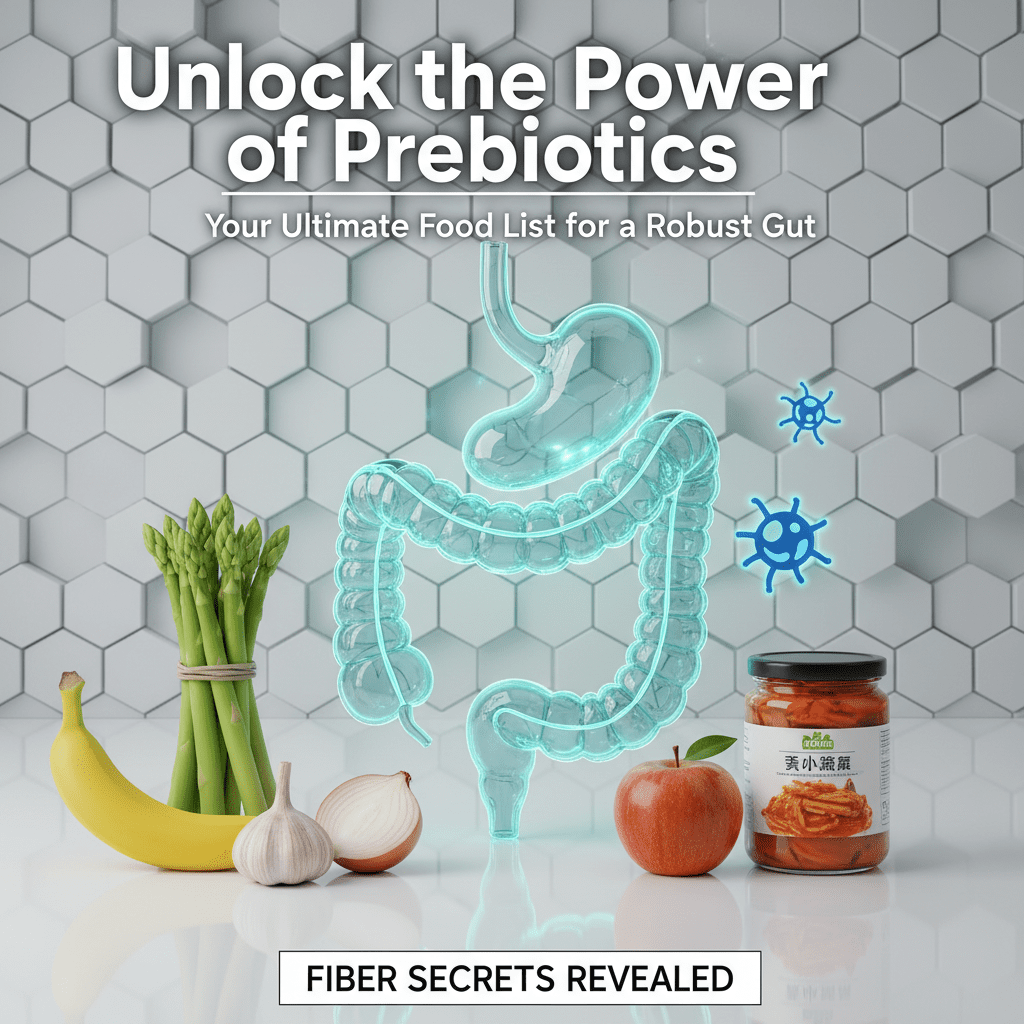
Unlock the Power of Prebiotics: Your Ultimate Food List for a Robust Gut [Fiber Secrets Revealed]
🚀 In This Definitive Guide:
- Why probiotics fail without prebiotics (The “Fertilizer” Truth).
- The “Big 5” Prebiotic Foods backed by 2024 SJSU Research.
- The “Cooling Secret”: How to turn pasta and rice into gut medicine.
- New “Psychobiotic” findings: How fiber boosts memory in older adults.
- A complete, low-FODMAP friendly shopping strategy.
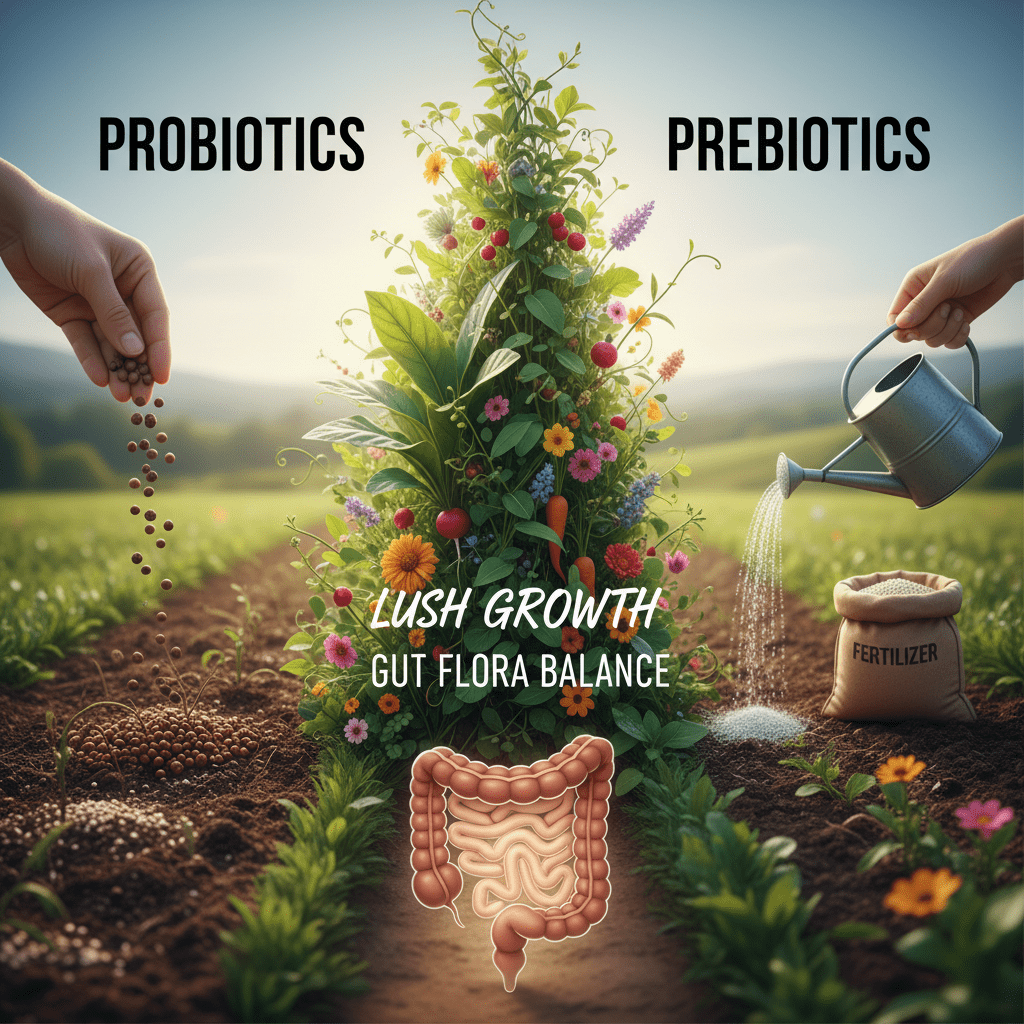
I still remember standing in the supplement aisle, staring at a $60 bottle of probiotics, wondering why the last three bottles hadn’t fixed my bloating or energy levels. I was doing everything “right”—or so I thought. I was planting seeds in a garden, but I wasn’t watering them. The soil was dry, and those expensive bacteria were dying before they could do any good.
This is the mistake most of us make. We obsess over probiotics (the bugs) but completely ignore prebiotics (the food that keeps them alive).
According to a 2024 report by Research and Markets, the global prebiotics market is projected to reach $9.85 billion by 2032. Why the explosion? Because the science has finally caught up. We now know that specific fibers don’t just help you go to the bathroom—they actively communicate with your brain, regulate your blood sugar, and manage your mood.
This isn’t just another generic list of “eat more fiber.” We are going to look at the chemistry of cooking, the 2025 science of “psychobiotics,” and the exact foods you need to build a bulletproof gut.
What Are Prebiotics? (The 2025 Definition)
Let’s strip away the marketing fluff. For years, we thought any fiber was a prebiotic. That’s not true anymore. In my experience talking with nutritionists, this distinction changes everything about how you shop.
The International Scientific Association for Probiotics and Prebiotics (ISAPP) reaffirmed their consensus in 2024, defining a prebiotic as “a substrate that is selectively utilized by host microorganisms conferring a health benefit.”
In plain English? It’s food your body can’t digest, but your good gut bacteria (like Bifidobacteria) love to eat. When they eat it, they ferment it. This fermentation process produces Short-Chain Fatty Acids (SCFAs), specifically one called Butyrate.
Butyrate is the magic molecule. It seals the gut lining (preventing “leaky gut”) and reduces inflammation throughout your entire body.
The “Big 5” Prebiotic Powerhouses (Highest Density)
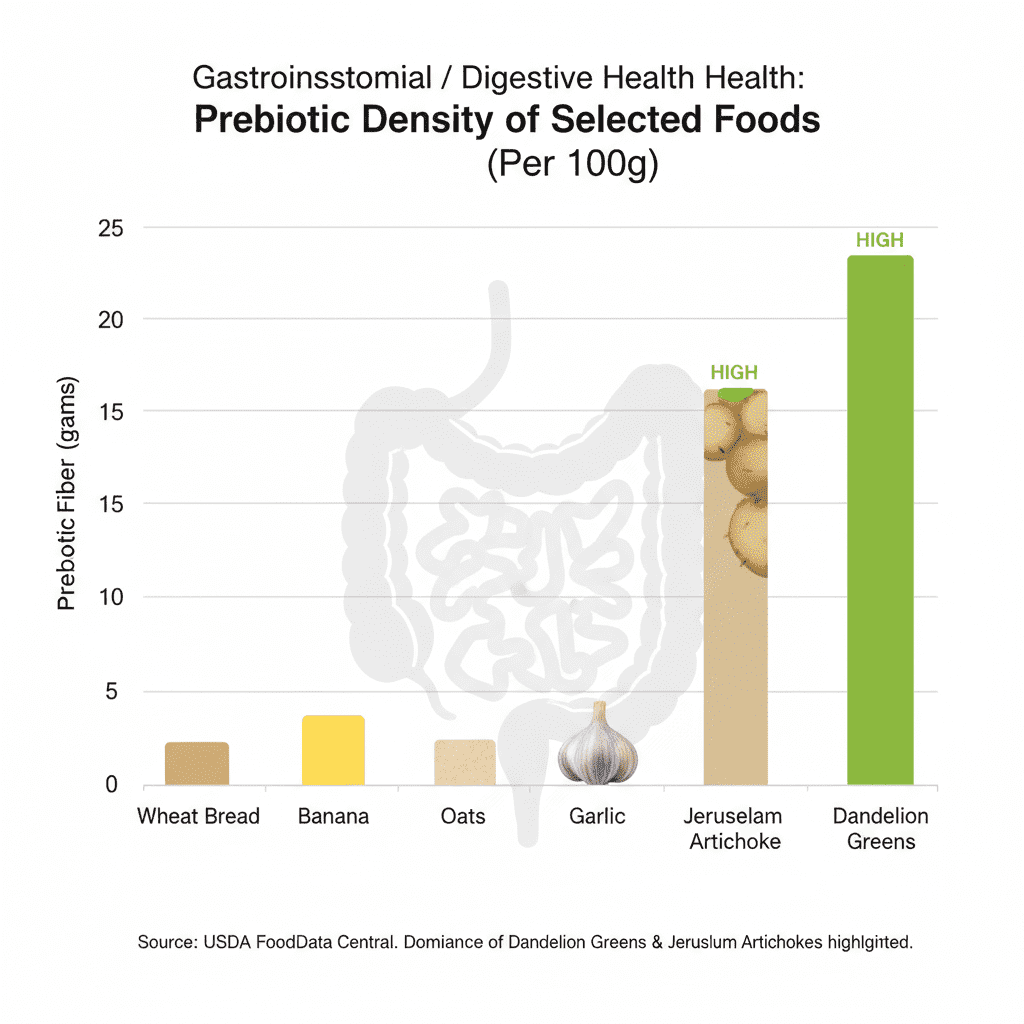
You don’t need to buy expensive powders. The most potent sources are likely in the produce section right now. Based on data presented at the American Society for Nutrition by researchers from San José State University (2024), specific foods contain significantly higher prebiotic density (mg/g) than others.
Here are the top 5 heavy hitters you need to rotate into your diet:
1. Dandelion Greens (The King of Inulin)
Prebiotic Content: ~150-240 mg/g
Often dismissed as a weed, dandelion greens are the gold standard. They are packed with inulin fiber. The taste is bitter, which signals high phytonutrient content.
How to Eat: I know the bitterness can be intense. My trick? Mix a small handful into a salad of milder greens (like spinach) and use a lemon-based vinaigrette. The acid cuts the bitterness instantly.
2. Jerusalem Artichokes (Sunchokes)
Prebiotic Content: ~170 mg/g
These look like knobby ginger roots but taste like a cross between a potato and an artichoke heart. They are incredibly potent.
Warning: They are nicknamed “fartichokes” for a reason. Start with thin slices—no more than 20g per serving—roasted in the oven until caramelized.
3. Garlic
Prebiotic Content: ~150 mg/g (varies by type)
Garlic acts as a prebiotic by promoting the growth of Bifidobacteria. Interestingly, raw garlic has higher prebiotic potential than cooked, but both are excellent.
4. Leeks
Prebiotic Content: ~110 mg/g
The “gentle giant” of the onion family. Leeks offer a massive dose of soluble fiber without the aggressive bite of raw onions. Use the white and light green parts for the best texture.
5. Onions (Red vs. White)
Prebiotic Content: ~60-100 mg/g
Cassandra Boyd, a researcher at San José State University, noted in her 2023 findings that “eating in a way to promote microbiome wellness… may be more attainable than you think; half a small onion provides the recommended 5 grams.”
The Pantry Heroes: Everyday Staples
If you can’t find dandelion greens, don’t worry. Your pantry probably holds some secret weapons.
- Chicory Root: Often found in “gut health” coffee substitutes. According to USDA FoodData Central, chicory root fiber is approximately 68% inulin by weight. It’s the most concentrated source available commercially.
- Barley & Oats: These contain Beta-glucans, a specific fiber that lowers cholesterol while feeding gut bugs.
- Cocoa: Yes, chocolate. Cocoa flavanols act as mild prebiotics. Stick to 85% dark chocolate to avoid the sugar killing your progress.
- Flaxseeds: The mucilage gum (the slime you see when they get wet) is pure fuel for your microbiome.
Fiber Secret Revealed: How to Create “Resistant Starch”
Here is the part that changed my life—and it will change the way you cook. Most people think potatoes and rice are just “empty carbs.” They are wrong.
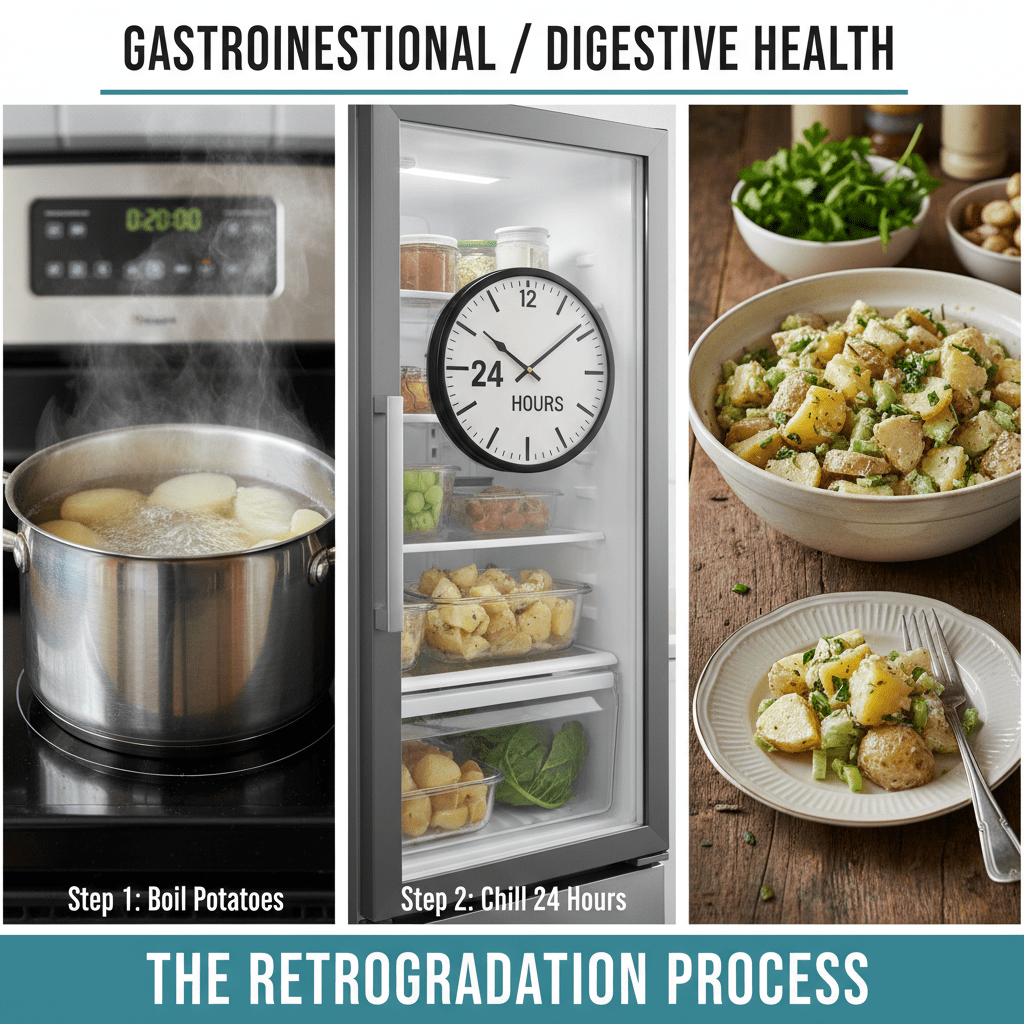
You can fundamentally change the chemical structure of starchy foods by temperature manipulation. This process is called retrogradation.
When you cook a potato or rice and then cool it down, the starch molecules crystallize. They turn into “Resistant Starch Type 3.” This starch resists digestion in the stomach (hence the name) and arrives in the colon intact to feed your bacteria.
According to a study validated in the Asia Pacific Journal of Clinical Nutrition (2024), cooling cooked white rice at 4°C for 24 hours increases its resistant starch content by 2.5 times compared to freshly cooked rice.
How to Execute the “Cooling Hack”:
- The Potato Protocol: Boil potatoes until soft. Place them in the fridge for at least 24 hours. Eat them cold (like in a potato salad with olive oil) or reheat them gently. The resistant starch remains even after reheating!
- The Rice Method: Parboil your rice. Cool it completely. Reheat it when you’re ready to eat. Not only does this boost prebiotics, but it also lowers the glycemic index, preventing insulin spikes.
- Green Bananas: Eat your bananas while they are still slightly green. A yellow banana is mostly sugar; a green banana is mostly resistant starch.
The Gut-Brain Connection: “Psychobiotics”
We used to think the brain ruled the body. Now, we know the gut pulls many of the strings. The vagus nerve connects your gut directly to your brain, acting as a superhighway for chemical messages.
This is where the term “Psychobiotics” comes in—prebiotics that specifically influence mental health.
In a groundbreaking 2024 study by King’s College London (TwinsUK Study), researchers conducted a trial on 36 pairs of twins aged 60+. One twin received a placebo, the other a daily prebiotic fiber supplement (inulin/FOS). The results were startling.
The twin taking the prebiotic showed significantly improved scores in visual memory and processing speed after just 12 weeks. Dr. Mary Ni Lochlainn, the lead researcher, stated: “Unlocking the secrets of the gut-brain axis could offer new approaches for living more healthily for longer.”
This means eating that onion or those oats isn’t just about digestion; it’s about protecting your mind as you age.
Prebiotics vs. FODMAPs: Avoiding the Bloat
I have to be honest with you: if you start eating dandelion greens and sunchokes tomorrow in massive quantities, you are going to be miserable. The gas and bloating can be severe.
This happens because your microbiome is shifting. Rapid fermentation produces gas. This is a sign it’s working, but it’s uncomfortable.
The “Start Low, Go Slow” Strategy:
- Week 1: Introduce ONE prebiotic food. Eat 1/4 of a serving. (e.g., one slice of onion).
- Week 2: Increase to a half serving.
- Week 3: Introduce a second food.
If you suffer from IBS (Irritable Bowel Syndrome), you might be sensitive to FODMAPs (fermentable carbs). In this case, you need Low-FODMAP Prebiotics. Your best friends are:
- Canned Lentils: (Rinsed well—the canning process leaches out the excess FODMAPs).
- Unripe Bananas: (Small portions).
- Flaxseeds: (Up to 1 tablespoon).
- Partially Hydrolyzed Guar Gum (PHGG): A supplement often tolerated by sensitive stomachs.
FAQ: Your Prebiotic Questions Answered
Q: What is the absolute number one prebiotic food?
A: While dried chicory root has the highest percentage, for whole foods, Dandelion Greens and Jerusalem Artichokes are tied for first place in terms of inulin density.
Q: Is Greek Yogurt a prebiotic?
A: No. This is a common confusion. Greek Yogurt is a probiotic (it contains the live bacteria). Prebiotics are the fiber. However, if you add sliced green bananas to your yogurt, you have a “Synbiotic” meal—the perfect combination.
Q: Can I cook prebiotic foods, or must they be raw?
A: It depends. Onions and garlic retain much of their prebiotic value when cooked (though raw is slightly better). However, resistant starch foods (potatoes/rice) must be cooked and then cooled to activate their benefits.
Q: Do prebiotics cause weight loss?
A: Indirectly, yes. Prebiotic fiber promotes satiety (fullness) and regulates blood sugar. Furthermore, Bifidobacteria play a role in metabolic regulation. A healthy gut extracts energy from food more efficiently, which can help regulate metabolism.
Conclusion: Your Action Plan
You don’t need a degree in biology to fix your gut. You just need to change your grocery list. The science from 2024 and 2025 is clear: the diversity of your diet dictates the resilience of your health.
Here is your summary for the next time you go shopping:
- Buy the Big 5: Grab an onion, some garlic, and try to find dandelion greens or leeks.
- Cool Your Carbs: Meal prep your potatoes and rice a day in advance to create resistant starch.
- Start Slow: Treat these foods like medicine. Dosage matters.
Your gut microbiome is a garden that you carry with you every day. You’ve been planting seeds for years; it’s time to finally start watering them.