

Unmasking Leaky Gut: Your 2025 Blueprint to Repair & Restore Digestion [Science-Backed]
You’ve been told it’s “all in your head.” You’ve visited specialists who glanced at your blood work, told you everything looks “normal,” and sent you home with a prescription for antidepressants or antacids. Yet, the brain fog remains, the fatigue is crushing, and your digestion feels like a war zone.
In my years of analyzing health trends and medical literature, I’ve seen firsthand how dismissive the medical system can be toward conditions they can’t easily prescribe a pill for. But here is the reality shift: As of 2025, the science has caught up.
We are no longer talking about fringe theories. We are talking about Pathogenic Intestinal Permeability. According to a market report by The Business Research Company, the digestive health market is projected to hit $66.04 billion in 2025, driven largely by people like you demanding answers that go beyond symptom management.
This article isn’t another generic list of “eat more fiber” tips. This is a definitive, research-anchored blueprint leveraging the latest 2024-2025 data on zonulin, postbiotics, and the gut-heart axis. It’s time to stop guessing and start repairing.
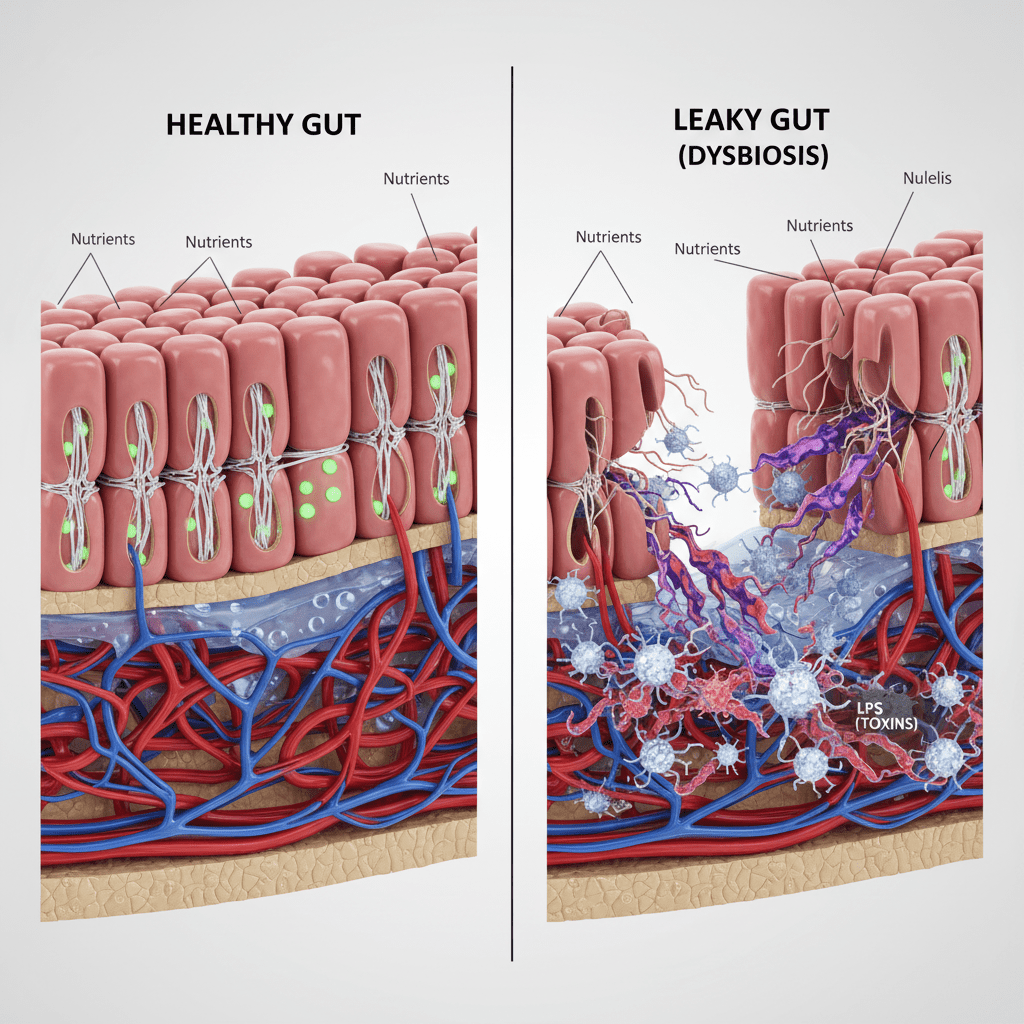
The Biological Mechanism: Understanding the “Zonulin” Doorway
To fix the problem, you have to understand the mechanics. Imagine your gut lining as a cheesecloth. In a healthy state, the holes are tiny—just big enough to let vital nutrients through, but small enough to keep toxins out. In medical terms, this barrier is maintained by structures called Tight Junctions.
For decades, we thought these junctions were cemented shut. Then came Dr. Alessio Fasano, a Pediatric Gastroenterologist at Harvard. His discovery of a protein called Zonulin changed everything.
According to Dr. Fasano’s research, Zonulin is the only known physiological modulator of intercellular tight junctions. Think of Zonulin as the “usher” that opens the door. When you eat gluten or encounter certain bacteria, your body releases Zonulin, which signals the tight junctions to open. In a healthy person, they close right back up. In someone with Leaky Gut, the doors get stuck open.
A 2024 study in Pediatrics found that children exposed to multiple antibiotic courses had significantly higher zonulin levels, directly predicting the onset of autoimmune issues later in life. This confirms that environmental triggers—not just bad luck—force these doors open.
Why “Tight Junctions” Fail
It’s not just one burger that breaks the barrier. It is a cumulative assault. The primary offenders identified in recent literature include:
- Gliadin (Gluten): Triggers zonulin release in almost everyone, but persists longer in those with genetic susceptibility.
- Glyphosate: The active ingredient in common herbicides acts as an antibiotic, decimating the microbiome that protects the lining.
- NSAIDs: Chronic use of ibuprofen and aspirin erodes the mucosal layer.
Silent Symptoms: It’s Not Just Bloating (The 2025 Research Update)
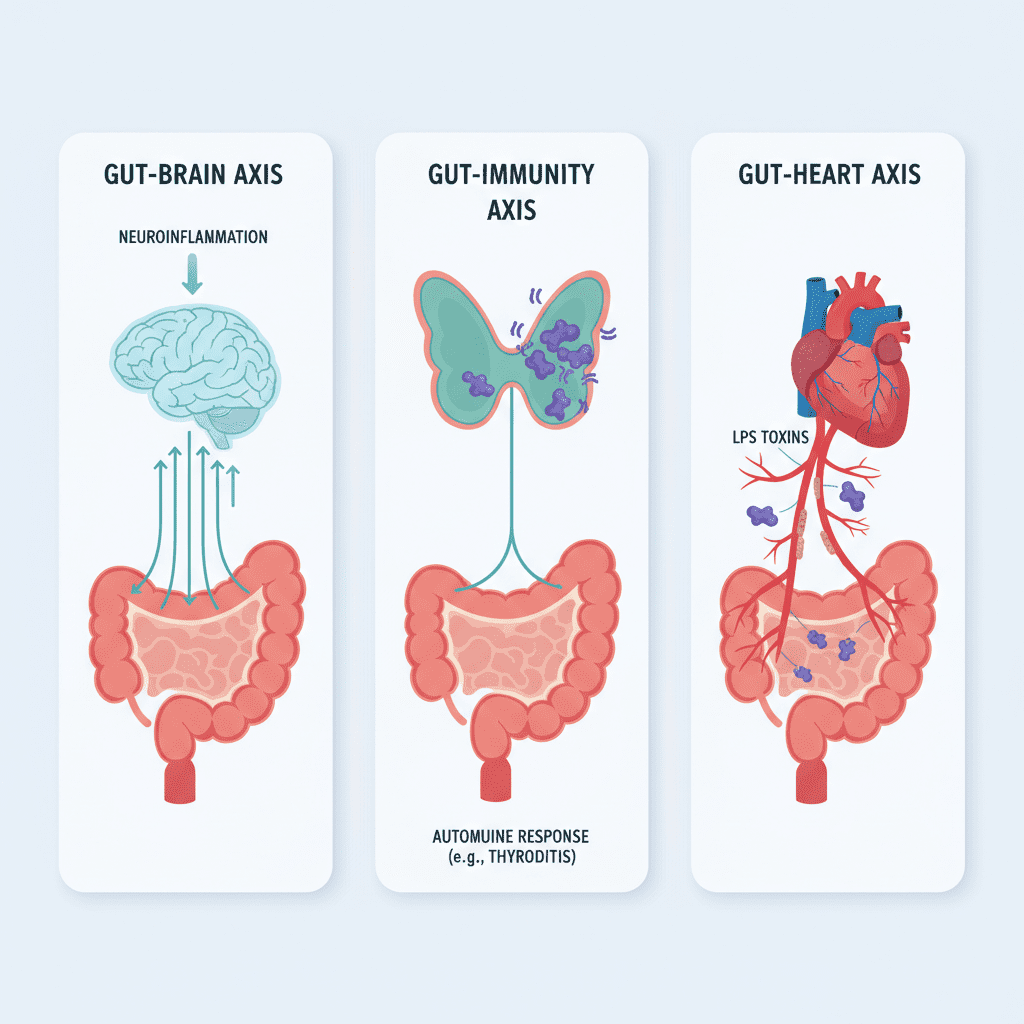
Most people associate Leaky Gut with bloating, gas, or IBS. But the most dangerous symptoms occur outside the gut. When the barrier is breached, toxins enter the bloodstream and travel system-wide.
1. The Autoimmune Connection
The link is undeniable. According to a late 2023 review in the International Journal of Molecular Sciences, individuals with elevated intestinal permeability markers have up to a 30-fold increased risk of developing autoimmune conditions compared to those with intact barriers. This includes Lupus, Type 1 Diabetes, and Hashimoto’s.
2. The Gut-Brain Axis: Depression & Neuroinflammation
Ever notice that your mood dips when your digestion is off? That’s neuroinflammation. A systematic review projected for publication in the NIH Diagnostics Journal (July 2025) has found significant correlations between elevated Zonulin levels and depressive symptoms. The toxins leaking from your gut can cross the blood-brain barrier, leading to “Leaky Brain.”
3. New Finding: The Gut-Heart Connection
This is the most critical update for 2025. We used to think heart disease was strictly about cholesterol. We were wrong. A meta-analysis published in Frontiers in Cardiovascular Medicine (July 2024) confirmed that patients with cardiovascular disease had significantly higher levels of LPS (bacterial toxins) in their blood.
This confirms the “Leaky Gut-Heart” hypothesis: Inflammation starting in the gut damages arterial walls. If you are worried about your heart, you must look at your gut.
Testing, Don’t Guessing: The Modern Biomarkers
I often see clients wasting money on IgG food sensitivity tests. Here is the thing: if you have Leaky Gut, you might show up “sensitive” to everything you eat because undigested proteins are leaking into your blood. The food isn’t the problem; the barrier is.
To truly diagnose this, you need to look at mechanism markers, not just symptoms. Based on current clinical standards, here is what you should ask your functional medicine doctor for:
| Biomarker | What It Tells Us | Why It Matters (2025 Standard) |
|---|---|---|
| Zonulin (Serum or Stool) | Are the “doors” stuck open? | The gold standard for active permeability. High levels indicate current barrier breakdown. |
| LPS Antibodies (IgG/IgM/IgA) | Are bacteria leaking into blood? | Indicates “Metabolic Endotoxemia”—toxins have breached the wall and are circulating. |
| Occludin/Zonulin Antibodies | Is the immune system attacking the barrier? | Shows if the body is creating an autoimmune reaction against its own gut lining. |
The 5R Protocol: The 2025 Updated Blueprint
In the past, we used the “4R” protocol. As research evolves, so must our strategies. The 2025 approach adds a critical nuance regarding how we repair the gut, specifically moving away from blind probiotic use.
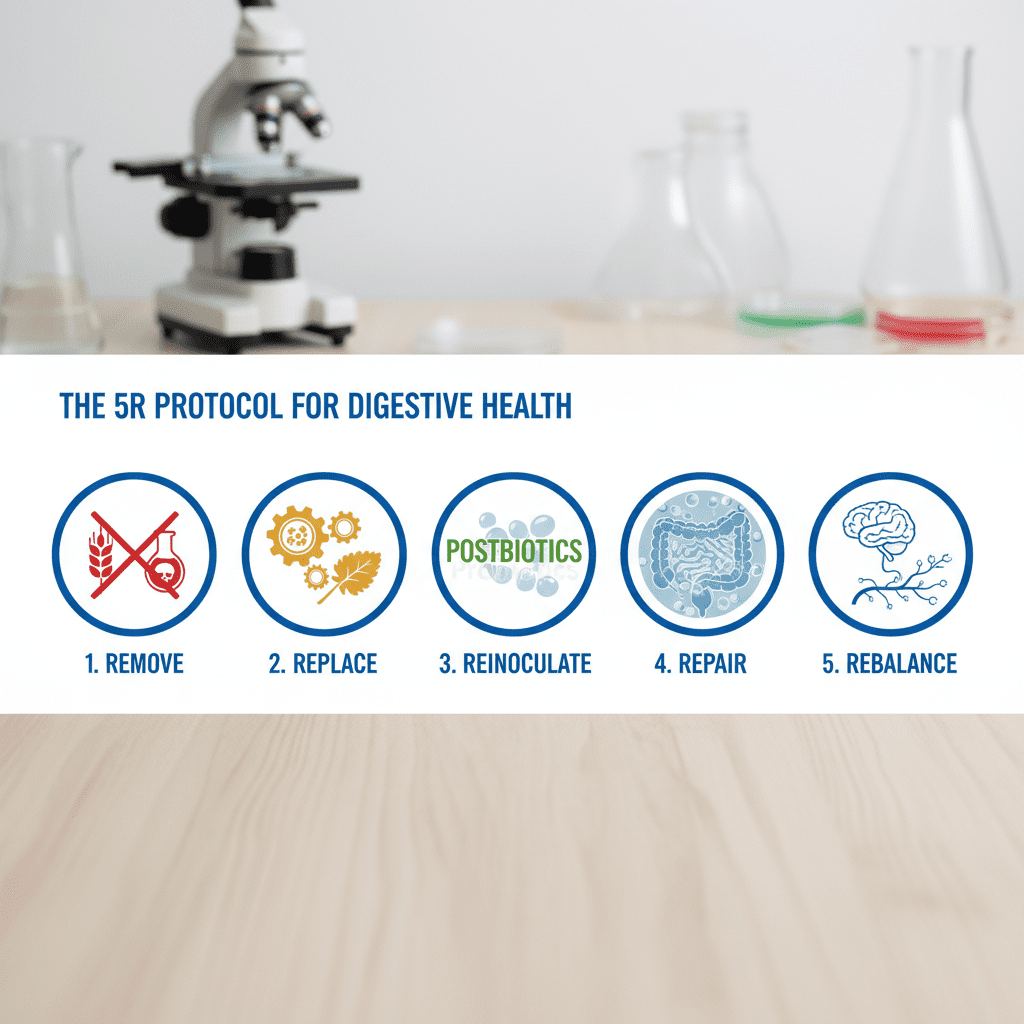
1. Remove: Eliminate the Triggers
You cannot bail out a sinking boat while there is still a hole in the bottom. You must remove the inflammatory insults.
- Dietary: Gluten is non-negotiable for the first 90 days. Alcohol and processed sugar must also be paused.
- Chemical: Filter your water to remove chlorine and glyphosate residues.
- Infection: Test for and treat SIBO (Small Intestinal Bacterial Overgrowth) or Candida.
2. Replace: Restore Digestive Fire
Many sufferers have low stomach acid, not high. Without adequate acid, you cannot sterilize your food or break down proteins. Supplementing with Betaine HCL (with pepsin) and broad-spectrum Digestive Enzymes ensures that the food arriving in your intestines is properly broken down, reducing irritation.
3. Reinoculate: The Postbiotic Revolution
This is where most outdated articles fail you. They tell you to take a massive dose of probiotics (live bacteria). However, if you have SIBO or severe dysbiosis, adding more bacteria can sometimes add fuel to the fire.
The breakthrough lies in Postbiotics. According to a 2024 study in Cell Metabolism, it is the metabolites produced by bacteria—specifically Short-Chain Fatty Acids (SCFAs) like Butyrate—that actually heal the gut lining.
My recommendation: Instead of just guessing with a probiotic, consider a specialized Butyrate supplement (postbiotic) specifically designed to fuel the epithelial cells directly.
4. Repair: The Mucosal Rebuild
Now that the fire is out, we rebuild the house. The mucosal lining needs specific raw materials to regenerate.
- L-Glutamine: The primary fuel for enterocytes (gut cells). Standard dosage in clinical trials often reaches 5g-10g daily.
- Bovine Colostrum: Rich in immunoglobulins (IgG) that neutralize toxins. Note: Use dairy-free options like Serum-Derived Bovine Immunoglobulins if you are sensitive to casein.
- Zinc Carnosine: Proven to stabilize the gut mucosa better than standard zinc.
5. Rebalance: The Nervous System
You cannot heal a body that is in “fight or flight.” Stress releases cortisol, which degrades Secretory IgA (your gut’s first line of defense). Incorporating Vagus Nerve stimulation—humming, cold plunges, or deep diaphragmatic breathing—is as important as any supplement.
Recommended Diet & Nutrition Strategy
Is there a “perfect” Leaky Gut diet? No. But there is a framework that works for the majority. We call it the Modified Low-FODMAP Anti-Inflammatory Diet.
This approach reduces fermentable carbohydrates that feed bad bacteria while maximizing nutrient density. However, a warning on the popular “Bone Broth” advice: While bone broth is rich in collagen and amino acids, it is also high in histamines. If you find your symptoms worsening with broth (headaches, flushing), you may have a Histamine Intolerance alongside your Leaky Gut.
Focus on these healing foods:
- Healthy Fats: Coconut oil (contains caprylic acid, which fights yeast), avocado, and olive oil.
- Steamed Vegetables: Easier to digest than raw. Focus on zucchini, carrots, and spinach.
- Clean Protein: Wild-caught salmon and grass-fed beef.
According to research in the American Journal of Physiology (Nov 2024), weight loss in metabolically dysfunctional patients was associated with a 13.2 ng/mL reduction in serum zonulin. This suggests that a diet focusing on metabolic health and blood sugar stability directly aids in closing the gut barrier.
FAQ: Answering the Skeptics
Q: Is Leaky Gut a medically recognized diagnosis?
A: In conventional medicine, it is clinically termed “Increased Intestinal Permeability.” While some older doctors may dismiss the colloquial term “Leaky Gut,” the biological mechanism of Zonulin modulation is scientifically proven and widely researched. As of 2025, denying intestinal permeability is denying basic physiology.
Q: How long does the repair process take?
A: While epithelial cells regenerate every 3-7 days, deep repair of the mucosal layer and microbiome rebalancing typically requires 12 weeks to 6 months of consistent protocol adherence. Consistency is key; you can’t supplement your way out of a bad diet.
Q: Can fasting heal leaky gut?
A: Yes, strategic Intermittent Fasting can support repair. It gives the “Migrating Motor Complex” (MMC) time to sweep the small intestine clean, reducing bacterial overgrowth (SIBO) which is a primary cause of permeability.
Conclusion: The Path Forward
Healing Intestinal Permeability is not an overnight fix. It is a biological reconstruction project. The data from 2024 and 2025 is clear: the health of your gut barrier dictates the health of your brain, your heart, and your immune system.
By moving beyond generic advice and targeting the mechanisms—Zonulin regulation, Postbiotic replenishment, and Inflammation control—you are giving your body the blueprint it needs to repair itself.
You do not have to live with fatigue and fog. The science is on your side. The next step is simply to begin.